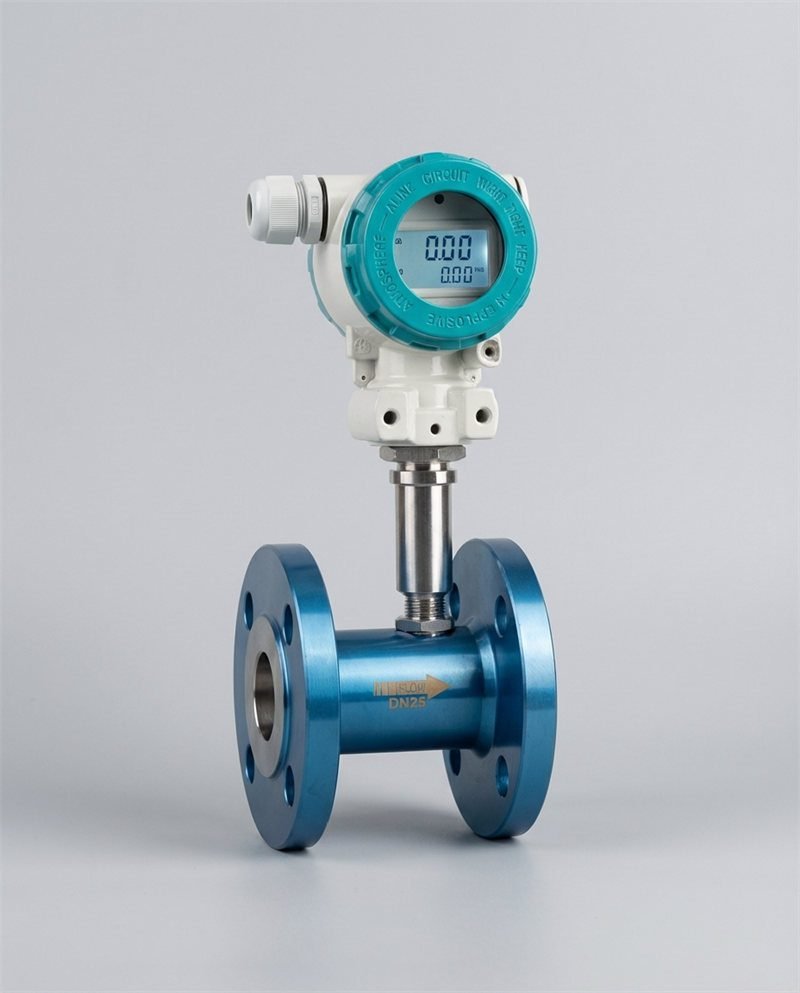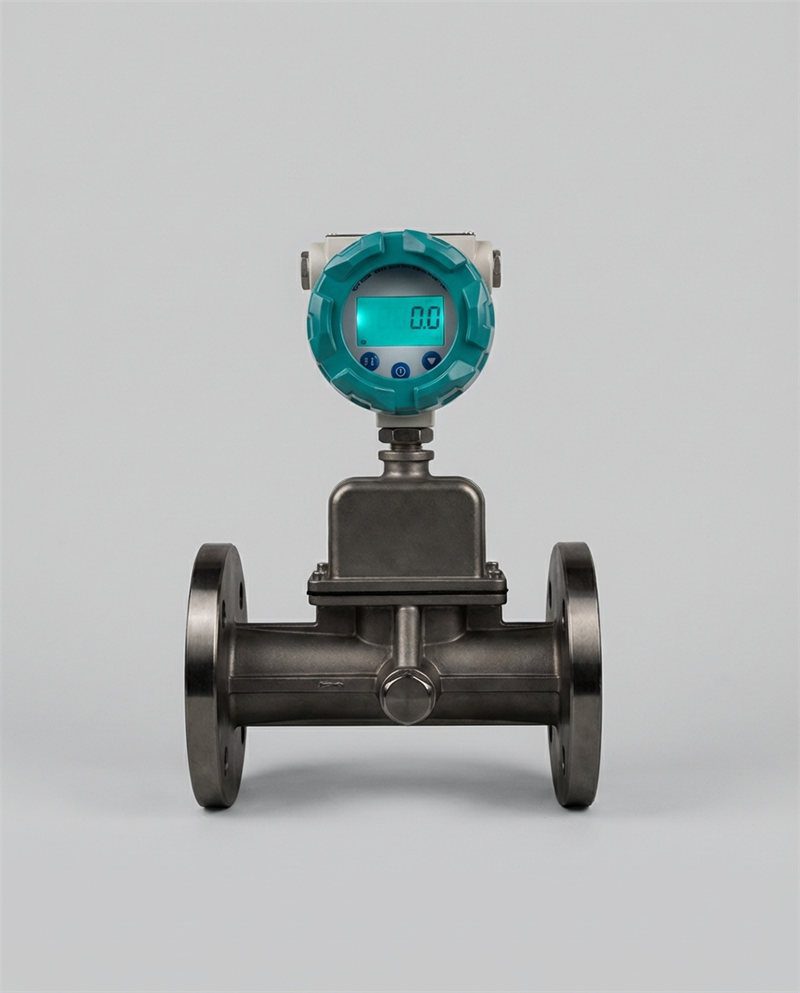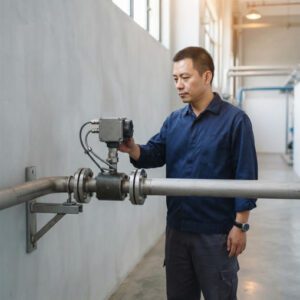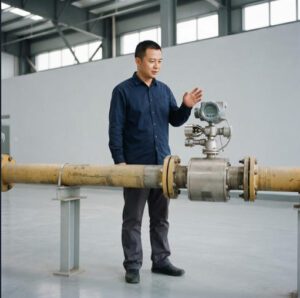
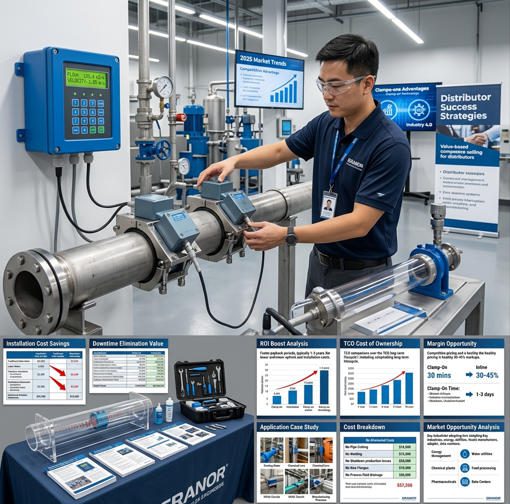
The clamp-on ultrasonic flow meter market reached USD 3.8 billion in 2025 and is forecast to hit USD 6.2 billion by 2033 at a 7.2% CAGR — the fastest growth segment in the entire flow measurement industry. The driver is not a single breakthrough technology; it is a decades-long accumulation of frustration with every disruption, every shutdown, every welding permit, and every production loss that inline meter installation has historically required. For distributors and agents who position themselves as the solution to those frustrations, the opportunity ahead is substantial.
1. The Evolution of Flow Measurement: From Intrusive to Non-Invasive Solutions
Traditional Flow Measurement Methods and Their Limitations
Challenges with Inline Installation Requirements
For most of industrial history, measuring flow meant penetrating the pipe. Orifice plates require flanged taps. Turbine meters require inline spool pieces. Electromagnetic meters require electrodes in contact with the fluid. Every one of these installations follows the same script: isolate the line, drain it, cut it, weld flanges, install the meter, pressure-test the joints, and restart the process — a sequence that routinely takes 2 to 5 days on a single measurement point in an operating plant.
In a refinery, chemical complex, or pharmaceutical facility running 24 hours a day, 350 days a year, a 4-hour planned shutdown costs far more than the meter being installed. A production line generating $60,000 per hour of output absorbs $240,000 in opportunity cost for a 4-hour installation window — before any mechanical contractor labour, pipe work, or recommissioning time is factored in.
Cost Implications of Pipeline Disruption and Downtime
The hidden costs of intrusive meter installation are rarely captured in the purchase order. A 2025 study by Frost & Sullivan found that non-invasive flow measurement reduces installation costs by up to 30% compared to in-line alternatives — and that gap widens significantly when production shutdown time is included. The study found total installed costs for inline meters in operating plants ran 3 to 7× the meter purchase price once all ancillary costs were included. That multiplier is the commercial argument at the heart of every clamp-on meter sale.

Inline meter installations on industrial process lines typically require process isolation, pipe cutting, and flanged spool-piece insertion — a sequence that takes 2–5 days on a single measurement point in an operating plant, driving up total installed costs by 3–7× the meter purchase price.
The Emergence of Clamp-On Ultrasonic Technology
How Ultrasonic Waves Enable Remote Measurement
Clamp-on meters exploit a physical principle that eliminates the penetration requirement entirely. Piezoelectric transducers — devices that convert electrical energy to mechanical vibration and vice versa — are clamped to the outside of the pipe. They transmit ultrasonic pulses (at frequencies of 0.5–4 MHz, far above human hearing) through the pipe wall and into the flowing fluid. By measuring what happens to those pulses — how long they take to arrive, or how their frequency shifts — the meter calculates fluid velocity without the transducers ever contacting the process fluid.
The physics works because the pipe wall, while an obstacle, is not an impenetrable barrier to ultrasound. Steel, stainless steel, PVC, copper, and most thermoplastics all transmit ultrasonic energy with manageable attenuation, provided the transducer is properly coupled to the pipe surface with an acoustic couplant compound. The measurement takes place inside the pipe; the instrumentation stays outside.
Key Technological Breakthroughs in the Last Decade
The clamp-on meters of 2025 are not the same instruments as those of 2010. Four specific advances have transformed the technology from a niche audit tool into a mainstream measurement solution:
📡 Digital Signal Processing
- Modern DSP chips separate flow signal from pipe noise at nanosecond resolution
- Multi-frequency operation adapts to pipe wall and fluid conditions automatically
- AI-assisted signal filtering now achieves ±0.5% on well-characterised pipes
🔗 IoT & Connectivity
- Embedded 4G/LTE and Wi-Fi enable remote monitoring of unmanned sites
- Modbus TCP/IP, HART 7, and OPC UA allow direct SCADA/cloud integration
- Edge computing firmware detects sensor degradation 30–60 days pre-failure
🧱 Transducer Durability
- IP68-rated housings maintain coupling integrity from −40°C to +200°C
- Solid-state couplant pads (vs. gel) last 5+ years without replacement
- ATEX/IECEx Zone 1 certified versions for hazardous area deployment
📐 Multi-Path Accuracy
- Dual-path clamp-on now achieves ±0.5% — matching single-path inline
- Velocity profile correction algorithms compensate for distorted flows
- Real-time diagnostic SQI (Signal Quality Index) flagging removes guesswork
Market Adoption Trends Across Industries
Growth Projections and Revenue Opportunities for Distributors
The clamp-on meter’s 7.2% CAGR outpaces the broader flow meter market (6.0% CAGR, Grand View Research, 2025), and the growth is concentrated in the retrofit and upgrade segment — the territory where distributors operate. New greenfield plant construction is slowing in many mature industrial economies; the addressable market is the enormous installed base of ageing mechanical meters in water utilities, chemical plants, refineries, and HVAC systems that need upgrading without production disruption. Clamp-on meters are the only technology that can serve all of those upgrade points without stopping the process.
Geographic and Sectoral Expansion Patterns
Asia-Pacific leads the growth trajectory, accounting for over 38% of global ultrasonic flow meter demand in 2025 driven by rapid infrastructure expansion in water utilities, chemical parks, and industrial energy management across China, India, and Southeast Asia (Fortune Business Insights, 2025). The Middle East and Africa are the second-fastest growing region, fuelled by desalination plant expansion, district cooling infrastructure in GCC cities, and upstream oil and gas monitoring programmes.
2. Understanding Clamp-On Ultrasonic Flow Meter Technology
Core Operating Principles
Transit-Time and Doppler Measurement Methodologies
All clamp-on ultrasonic meters use one of two measurement principles, determined by the characteristics of the fluid being measured.
Transit-time — the dominant technology for clean fluid applications — sends paired ultrasonic pulses in opposite directions through the pipe: one downstream (with the flow), one upstream (against it). When fluid is moving, the downstream pulse arrives slightly sooner and the upstream pulse arrives slightly later. The time difference (Δt) between the two travel times is directly proportional to the average fluid velocity along the acoustic path. Multiply velocity by cross-sectional area and you have volumetric flow rate. This method requires a clean, particle-free fluid so the pulses can travel unobstructed.
Doppler-shift meters take the opposite approach: they require particles or bubbles. The meter emits a continuous ultrasonic beam into the fluid. When the beam strikes particles or bubbles moving with the fluid, it reflects back at a slightly different frequency — the Doppler shift — proportional to the reflector velocity (and therefore the fluid velocity). Doppler meters are purpose-built for wastewater, slurry, aerated liquids, and any application where particulate content is consistent and above ~80 mg/L at particle sizes above 75 µm.
Signal Processing and Data Accuracy Mechanisms
Modern clamp-on transmitters sample the received ultrasonic signal at 20–200 MHz and pass the raw data through a sequence of digital filters: bandpass filtering (isolating the carrier frequency from pipeline noise), cross-correlation algorithms (determining exact signal arrival time with nanosecond precision), and multi-measurement averaging (combining 10–100 measurements per second to reduce timing jitter). The result is a stable, low-noise flow reading updated as frequently as 10 times per second — fast enough for most process monitoring and energy metering applications.
Technical Specifications That Matter to Your Clients
Flow Range Capabilities and Turndown Ratios
Turndown ratio — the ratio of maximum to minimum measurable flow — is a specification that separates adequate meters from excellent ones. A 100:1 turndown ratio means a meter rated for 0–10 m/s can still measure accurately at 0.1 m/s. For comparison, a typical turbine meter has a 10:1 turndown; many electromagnetic meters offer 30:1; quality clamp-on transit-time meters routinely achieve 100:1 to 150:1. This wide dynamic range matters to clients whose processes operate at highly variable flow rates — seasonal water demand fluctuations, shift-based production cycles, or systems that see very low flow during shutdown transitions.
The Jade Ant Instruments clamp-on ultrasonic flow meter range covers pipe diameters from DN32 to DN1000 in clamp-on configuration and DN50 to DN6000 in insertion configuration — a span that covers over 95% of industrial piping systems without requiring any specialised hardware beyond the standard transducer kit.
Accuracy Standards and Certification Requirements
Table 1: Clamp-On Ultrasonic Flow Meter — Key Technical Specifications by Configuration
| Parameter | Single-Path Clamp-On | Dual-Path Clamp-On | Inline Multi-Path |
|---|---|---|---|
| Accuracy (% of reading) | ±1.0–2.0% | ±0.5–1.0% | ±0.15–0.5% |
| Repetibilidad | Better than 0.5% | Better than 0.3% | Better than 0.1% |
| Turndown ratio | 100:1 | 150:1 | 400:1 |
| Pipe diameter range | DN25–DN6000 | DN50–DN3000 | DN15–DN3000+ |
| Process temperature | −40°C to +160°C (std) / +200°C (HT) | −40°C to +200°C | Up to +450°C |
| IP rating | IP67/IP68 | IP67/IP68 | IP67/IP68 |
| Custody transfer certified? | No (monitoring only) | Marginal (some jurisdictions) | Yes (AGA-9, API MPMS 5.8) |
Compatibility Across Pipe Materials and Fluid Types
Performance on Steel, Plastic, Composite, and Lined Pipes
Clamp-on meters transmit ultrasound through the pipe wall, so the pipe material and condition directly affect measurement quality. Compatible materials include carbon steel, stainless steel (304, 316, duplex), copper, brass, PVC, CPVC, HDPE, PP, PVDF, and most thermoplastics. The primary incompatible conditions are: internally rubber-lined pipe (air gap between liner and steel creates near-total acoustic reflection), bitumen-coated internal walls, severely corroded steel with wall thickness variation above 15% of nominal, and concrete-lined pipe. For any borderline pipe condition, a field Signal Quality Index (SQI) check — performed with a portable meter before committing to permanent installation — takes 10 minutes and definitively confirms whether the location will work.
3. Eliminating Downtime: The Business Case for Non-Invasive Installation
▲ Live installation and commissioning demonstration of a clamp-on ultrasonic flow meter — showing transducer mounting, couplant application, spacing calculation, and signal quality verification. The complete installation from unboxing to first reading takes under 90 minutes on a DN200 pipeline.
Quantifying Installation Costs and Timeline Reductions
Comparative Cost Analysis: Clamp-On vs. Inline Meters
Table 2: Total Installed Cost Comparison — Clamp-On vs. Inline Ultrasonic Flow Meter (Brownfield, DN100 Line)
| Cost Element | Clamp-On | Inline (Spool-Piece) | Saving with Clamp-On |
|---|---|---|---|
| Meter purchase price | $1,500–$4,000 | $3,000–$8,000 | $1,500–$4,000 |
| Installation labour | $150–$400 (1–2 hrs) | $1,200–$3,500 (4–8 hrs) | $1,050–$3,100 |
| Pipe cutting & flanging | $0 | $600–$2,000 | $600–$2,000 |
| Process shutdown cost | $0 | $2,000–$15,000+ | $2,000–$15,000+ |
| Pressure testing & sign-off | $0 | $200–$800 | $200–$800 |
| Commissioning | $100–$300 | $300–$800 | $200–$500 |
| Total Installed Cost | $1,750–$4,700 | $7,300–$30,100 | Up to 85% lower |
ROI Calculations for Your Customers
(Illustrative USD, DN100 brownfield process line)
Source: compiled from Jade Ant Instruments TCO comparison data, industry TCO studies, and manufacturer cost models. Values are illustrative for a typical brownfield DN100 installation.
Operational Continuity Benefits
Zero-Shutdown Installation Advantages
The zero-shutdown advantage is not just a convenience — it is a fundamental shift in how measurement infrastructure can be built. A plant manager who previously had to budget a 4-hour shutdown window (and the associated safety permits, bypass installations, process restart procedures, and quality hold protocols) to install one flow meter can now install the same measurement in 90 minutes during normal production, by a single instrument technician, with no piping contractor required.
For pharmaceutical and food processing facilities where each production shutdown requires a full cleaning validation and microbial sampling protocol before restart, this difference is measured in days and tens of thousands of dollars per installation event — not hours. Clamp-on meters transform flow measurement from a capital event requiring budget committee approval into a routine instrumentation task.
Maintenance and Accessibility Improvements
Simplified Maintenance Protocols Without System Shutdown
Clamp-on transducer replacement — the only physical maintenance that ever requires hands-on intervention — takes 20 minutes and does not require stopping the process. The old transducers are simply unclamped and new ones positioned in their place. Compare this to replacing an inline meter: pipe isolation, drain-down, flange bolt removal, spool piece extraction, new spool piece installation, pressure testing, and restart — a half-day to full-day event that generates maintenance orders, safety permits, and production loss documentation.
4. Measurement Accuracy and Reliability in Diverse Applications

Proper acoustic couplant application between the transducer face and pipe surface eliminates signal-blocking air gaps. A Signal Quality Index (SQI) above 60% on the meter display confirms acceptable coupling — the primary field indicator of measurement reliability before final commissioning.
Ensuring Precision Across Variable Conditions
Temperature and Pressure Compensation Technologies
The speed of sound through any fluid changes with temperature — in water, from approximately 1,408 m/s at 0°C to 1,555 m/s at 100°C, a 10% variation. An uncorrected transit-time meter would introduce a proportional reading error across this range. All quality clamp-on meters embed a temperature sensor in the transducer housing and apply continuous correction to the transit-time calculation, maintaining specified accuracy across the full operating temperature range.
For gas measurement applications, pressure compensation is equally critical. Gas density varies directly with pressure, and the speed of sound in gas is proportional to the square root of absolute temperature. Gas clamp-on meters (a more specialised product category) include pressure transmitter inputs and AGA-8 equation-of-state calculations to convert measured volumetric flow to standard conditions — a requirement for any gas energy billing or custody verification application.
Multi-Path Measurement for Enhanced Accuracy
Single-path clamp-on meters sample fluid velocity along one diagonal acoustic chord through the pipe. Because the velocity profile across the pipe cross-section is not uniform (faster at the centre, slower near the walls), a single measurement path introduces profile-correction uncertainty. Dual-path meters use two acoustic chords at different positions, allowing more representative cross-sectional averaging and typically halving the profile-related error component.
For applications where ±0.5% accuracy is required from a clamp-on installation — typically district energy billing, process control above 10 MW, or municipal water revenue metering sub-applications — dual-path clamp-on meters with site-specific in-situ calibration verification (comparing against a portable reference meter) can consistently deliver this performance level on well-characterised pipes with adequate straight runs.
Industry-Specific Performance Benchmarks
Chemical and Petrochemical Processing Applications
In chemical plants running corrosive acid streams, solvent lines, and aggressive reagent transfers, the accuracy requirement is typically ±1–2% for process mass balance and feed rate monitoring. Clamp-on transit-time meters on well-maintained stainless steel or carbon steel lines consistently deliver this performance — confirmed by a 2022 independent field study in Flow Measurement and Instrumentation (ScienceDirect) that tested seven clamp-on meters under industrial conditions, with best-case field accuracy of ±1.0% on clean, well-characterised pipe sections.
HVAC, District Heating, and Cooling Systems
HVAC energy metering requires flow accuracy sufficient for BTU (thermal energy) billing to the nearest 1–2% — a requirement met by single-path clamp-on meters on clean chilled or hot water loops. Where the application is tenant sub-metering or district energy billing between trading parties, dual-path clamp-on meters with temperature sensors on supply and return pipes (forming a complete heat meter) meet EN 1434 Class 2 requirements in most EU jurisdictions, and ASHRAE 90.1 sub-metering requirements in North America.
Validation and Certification Standards
ISO and International Compliance Requirements
The primary standards applicable to clamp-on meters are: ISO 6416 (ultrasonic measurement of streamflow — applicable to large open-channel and pipe systems), ISO 9104 (methods of evaluating the performance of ultrasonic flow meters), and OIML R 49 for water meters under the EU Measuring Instruments Directive (MID). Custody transfer applications for natural gas require AGA Report No. 9 certification; liquid hydrocarbons require API MPMS Chapter 5.8 — both of which currently mandate inline multi-path meters, not clamp-on configurations.
5. Industry Applications: Solving Real-World Operational Challenges
Source: Market research aggregated from Fortune Business Insights, DataIntelo 2025
- Water & Wastewater (35%) — Transit-Time + Doppler
- HVAC & District Energy (20%) — Transit-Time
- Chemical & Petrochemical (18%) — Transit-Time
- Oil & Gas (15%) — Transit-Time (check-metering)
- Food & Beverage (7%) — Transit-Time
- Other Industries (5%) — Mixed
Chemical and Petrochemical Industries
Corrosive Fluid Measurement Without Equipment Degradation
Chemical plants processing hydrochloric acid, sulfuric acid, chlorine compounds, and organic solvents face a fundamental instrumentation problem: the most important flow measurements are on the most corrosive lines. Electromagnetic meters have electrodes that dissolve. Turbine meters have seals that swell and bearings that corrode. Even the most corrosion-resistant inline meter materials eventually fail when continuously immersed in concentrated acid at elevated temperature.
Clamp-on meters resolve this by removing the transducers from the process entirely. A plant measuring 30% HCl at 60°C through a PVDF-lined carbon steel pipe can install a standard IP68-rated clamp-on meter without any material compatibility concerns — the transducers couple acoustically through the pipe wall and never contact the acid. Jade Ant Instruments’ documented application data across chemical plant deployments shows that the lifetime maintenance cost advantage of clamp-on versus conventional wetted-meter technology in aggressive chemical service typically exceeds 40% over a 7-year horizon.
Water and Wastewater Management
Custody Transfer and Billing Accuracy
Municipal water utilities globally lose an average of 30–40% of treated water to non-revenue water (NRW) — the gap between water produced and water billed to customers, accounting for leakage, meter errors, and unbilled consumption. Reducing NRW requires metering every District Metered Area (DMA) inlet and major transmission main. A utility with 200 such points installing clamp-on meters at $3,500 per point (installed) versus inline meters at $12,000 per point commits $700,000 versus $2.4 million — a $1.7 million difference that determines whether the NRW programme is approved at all.
Leak Detection and System Optimisation
Multi-point clamp-on monitoring across a distribution network creates a continuous mass balance: if the total flow entering a zone exceeds the total flow measured at consumption points plus known exports, the difference quantifies unaccounted-for water. Real-time NRW tracking enabled by affordable clamp-on metering allows utilities to prioritise leak repair by sub-zone, directing pipe rehabilitation spend where it has the highest impact rather than conducting expensive district-by-district manual surveys.
HVAC and District Energy Systems
Energy Efficiency Monitoring and Cost Reduction
District cooling and heating operators billing tenants or building owners for thermal energy consumption must measure flow with sufficient accuracy to support valid invoices. A DN300 chilled water header carrying 800 m³/h at a 6°C supply/return temperature differential represents approximately 5.6 MW of cooling load. At a district cooling tariff of $0.08/kWh, a 2% metering error generates $78,000 in annual billing discrepancy — more than the cost of upgrading to dual-path clamp-on accuracy.
The energy metering application is particularly strong for clamp-on meters because the fluid is almost universally clean, treated water — ideal for transit-time measurement. Jade Ant Instruments’ ultrasonic water flow meter selection guide covers heat meter configuration (flow meter + temperature sensors) for district energy and HVAC BTU metering in detail.
Food and Beverage Processing
Hygiene Compliance and Non-Contamination Assurance
Food and beverage facilities operate under stringent hygiene regulations — FDA 21 CFR Part 110 in the US, EU Regulation 852/2004 in Europe — that require food-contact surfaces to be cleanable and non-contaminating. Any instrument that penetrates a food-product line creates a potential contamination point: a crevice that harbours bacteria, a seal that leaches into the product, or a dead leg that traps residue between cleaning cycles.
Clamp-on meters eliminate all of these risks by design. The pipe wall remains intact. No new connections are created. The CIP (Clean-in-Place) cycle is unaffected by the meter installation. For dairy processing, beverage filling, and pharmaceutical purified water systems, this non-contact characteristic is not merely convenient — it is often the only compliant option for measuring flow without revalidating the production line.
Oil and Gas Operations
Subsea and Onshore Pipeline Monitoring
In upstream oil and gas, clamp-on meters serve a specific and valuable role as check meters — independent verification instruments installed alongside fiscal custody transfer meters to provide a continuous cross-check of primary meter performance. When the clamp-on reading diverges from the primary meter by more than a defined threshold (typically ±0.5–1%), an alert is generated that triggers early investigation of the primary meter condition, preventing undetected measurement drift from accumulating into significant financial reconciliation disputes between trading parties.
6. Cost-Benefit Analysis: Why Your Customers Should Invest Now
Direct Cost Savings
Installation Labor and Material Reduction
The installation labour differential between clamp-on and inline meters is the most immediate and quantifiable cost advantage. A single instrument technician with a clamp-on kit completes the full installation — pipe survey, transducer spacing calculation, surface preparation, transducer mounting, couplant application, parameter entry, signal quality verification, and 4–20 mA loop check — in 1 to 2 hours. The same measurement point with an inline spool piece requires: a piping contractor (2-person crew minimum) for pipe cutting and flange installation (4–8 hours), an instrument technician for wiring and commissioning (2–3 hours), and a QA inspector for pressure testing and sign-off (1–2 hours). The labour cost gap: $200–$400 versus $1,500–$5,000+ per measurement point.
Indirect Financial Benefits
Predictive Maintenance and Asset Optimisation
Modern clamp-on transmitters continuously monitor and record diagnostic parameters beyond flow rate: signal quality index, velocity of sound in the fluid (which can indicate temperature changes or fluid composition shifts), flow profile symmetry indices, and noise floor levels. These diagnostics serve as an early warning system. A declining SQI trend over months indicates couplant degradation or pipe surface changes — detectable and correctable before measurement accuracy is compromised. A shift in the measured speed of sound without a corresponding temperature change can indicate a change in fluid composition, useful in processes where concentration control is critical.
Improved Inventory Management and Billing Accuracy
Accurate flow measurement directly improves inventory accuracy. A chemical plant with ±3% flow measurement uncertainty on its raw material intake lines carries a correspondingly large inventory reconciliation error — material that is unaccounted for in the books and requires periodic write-offs or conservative stock provisions. Upgrading to ±1% clamp-on measurement reduces this uncertainty, tightening the material balance and reducing the working capital tied up in inventory buffer provisions. For a plant consuming $5 million of raw materials annually, a 2% measurement improvement frees approximately $100,000 in inventory accuracy.
Long-Term Value Proposition
Total Cost of Ownership Over System Lifespan
Over a 10-year operational horizon, the TCO gap between clamp-on and inline meters becomes even more pronounced when equipment replacement costs are factored in. A failed inline meter requires the full installation cost to be repeated: pipe cutting, process shutdown, flanging, pressure testing. A failed clamp-on transducer is replaced in 20 minutes at $200–$500 parts cost, without stopping the process. Given that both technologies have similar mean time between failures (MTBF exceeding 100,000 hours), the asymmetric replacement cost structure strongly favours clamp-on over any 10+ year measurement horizon.
Scalability for Multi-Site Deployments
For clients managing 10, 50, or 100 measurement points across a single facility or across multiple sites, the economics of clamp-on scale linearly in a way that inline never can. A portable clamp-on kit covering DN50 to DN600 (a standard configuration from the Jade Ant Instruments product range) can be used as a commissioning verification tool, an audit instrument, and a temporary monitoring device — replacing what would otherwise require three separate instrument types and three sets of installation infrastructure.
Multi-point clamp-on measurement programmes deliver measurement coverage across entire process plants without any pipe modification. A single portable kit handles commissioning verification, annual audit surveys, and emergency check-metering across all pipe sizes — replacing multiple legacy instrument types with one flexible system.
7. Selection and Implementation: A Practical Guide for Agents and Distributors
Assessing Customer Needs and Application Requirements
Site Survey Best Practices and Data Collection
A pre-sale site survey is the highest-value technical service a distributor can offer and the most reliable way to prevent post-sale specification problems. The essential data to collect at each measurement point:
Matching Technology Specifications to Customer Goals
Table 3: Application Requirements vs. Recommended Clamp-On Configuration
| Customer Requirement | Recommended Configuration | ¿Por qué? |
|---|---|---|
| Process flow monitoring, ±2% acceptable | Single-path clamp-on, transit-time | Lowest cost; adequate accuracy; zero shutdown |
| Energy/BTU sub-metering, ±1–2% | Single-path + dual temperature sensors | Meets EN 1434 Class 2 / ASHRAE sub-metering requirements |
| Revenue/billing metering, ±0.5–1% | Dual-path clamp-on + in-situ calibration verification | Achievable with proper installation; should be confirmed on-site |
| Wastewater / activated sludge monitoring | Single-path Doppler clamp-on | Particles provide reflectors; transit-time will fail |
| Custody transfer (gas or liquid hydrocarbons) | Inline multi-path (AGA-9 / API MPMS 5.8) | Clamp-on not currently certifiable for fiscal metering |
| Temporary audit / commissioning verification | Portable clamp-on kit (multi-pipe-size) | Covers multiple measurement points; redeployable same day |
| Corrosive / aggressive chemical service | Clamp-on (no fluid contact); check pipe material compatibility | Zero contamination risk; no wetted parts to degrade |
Training and Customer Support Strategies
Operator Training Programs and Documentation
The most common cause of clamp-on meter underperformance in the field is not a hardware deficiency — it is a configuration error made during installation. The meter was given the nominal pipe OD instead of the measured OD. The wall thickness was taken from a data sheet for a different pipe schedule. The transducer spacing was set for V-mode but the installation used Z-mode geometry. Each of these errors introduces a systematic, persistent offset that the meter cannot self-correct.
Distributor-provided installation training — even a half-day classroom session covering pipe measurement technique, transducer spacing calculation, couplant application, and signal quality interpretation — measurably improves field accuracy results. Clients who receive this training report first-installation success rates above 90%; those who rely solely on the meter manual report rates closer to 60%. The training investment also positions your team as the authoritative technical resource, creating long-term customer dependence on your expertise rather than a competitor’s.
8. Competitive Advantages and Market Differentiation
Positioning Clamp-On Solutions in Your Portfolio
Unique Selling Points for Different Customer Segments
Different buyer personas within the same customer organisation respond to different value propositions. Engineering managers respond to accuracy data and compliance evidence. Operations managers respond to uptime and maintenance reduction. Procurement responds to TCO calculations. Sustainability officers respond to energy efficiency and carbon accounting. Clamp-on meters have a compelling story for all four — but you must tailor the narrative to the audience.
For Engineering Teams
- ±0.5–2% accuracy on clean pipe, documented by independent field studies
- DN32–DN6000 coverage from a single product family
- SQI diagnostics confirm installation quality before commissioning sign-off
- Full protocol suite: 4–20 mA, HART, Modbus, PROFIBUS optional
For Operations Teams
- Zero production shutdown for installation or sensor replacement
- No moving parts — no bearings, rotors, or seals to fail
- Transducer replacement in under 20 minutes without pipe isolation
- 10–15+ year operational lifespan in protected installations
For Procurement Teams
- Total installed cost 60–80% lower than inline in brownfield retrofit
- 5-year TCO approximately $3,000 vs. $16,000 for equivalent inline (DN100)
- Portable kits serve as multi-function audit + monitoring + commissioning tools
- Rental programme revenue model available for distributor resellers
For Sustainability Teams
- Enables ISO 50001 energy metering infrastructure without plant modification
- Non-revenue water reduction: each % of NRW recovered = direct revenue
- Zero pressure drop = no pumping energy penalty vs. intrusive meters
- LEED sub-metering compliance achievable without CAPEX pipeline work
Building Customer Loyalty Through Innovation
Integration with Digital Monitoring and IoT Platforms
The transition from field instrument to connected data node is the defining trend in industrial instrumentation through 2025–2035. Clients who invested in SCADA infrastructure a decade ago are now investing in cloud analytics, digital twin models, and AI-based predictive maintenance — and they need the flow measurement data to feed those platforms in real time, from every relevant point in the process, reliably and without maintenance intervention.
Modern clamp-on transmitters with embedded Modbus TCP/IP or OPC UA connectivity publish flow rate, totalised volume, temperature, speed of sound, SQI, and alarm status to plant data historians (OSIsoft PI, Ignition, Wonderware) or cloud analytics platforms (Azure IoT, AWS IoT Core, GE Predix) directly over Ethernet. The meter becomes a data point in the plant’s digital infrastructure — not just an analogue instrument on the wall. This connectivity upgrades the sales conversation from “we have a good meter” to “we provide a data acquisition node that integrates with your digital transformation programme.”
9. Overcoming Objections and Addressing Customer Concerns
Accuracy and Reliability Misconceptions
Addressing Concerns About Non-Invasive Measurement
The most persistent client objection to clamp-on meters is: “Can they really be as accurate as an inline meter if they don’t touch the fluid?” The answer requires precision: clamp-on meters in ideal conditions — clean fluid, well-characterised pipe, proper installation, adequate straight run — deliver ±0.5–1.0% accuracy, which equals or exceeds single-path inline meter performance. Where clamp-on cannot match inline is in fiscal custody transfer (which requires ±0.15–0.25% from multi-path inline meters) and in highly demanding process control applications requiring sub-1-second response times. For the 80–90% of industrial measurement points where process monitoring, energy metering, or flow balance tracking is the objective, clamp-on accuracy is entirely adequate.
Integration with Existing Systems
Compatibility with Legacy Control Systems
The 4–20 mA analog output on every clamp-on transmitter is compatible with every PLC, DCS, and SCADA input card manufactured in the last 40 years. There are no compatibility concerns for analog integration. For digital integration, Modbus RTU over RS-485 is supported by virtually all modern industrial control platforms including Siemens S7, Allen-Bradley ControlLogix, ABB 800xA, Honeywell Experion, and Yokogawa CENTUM. The only scenario that requires a protocol converter is integration with older proprietary fieldbus systems (Foundation Fieldbus, Profibus PA) where a gateway is needed — a well-understood and economical solution.
Initial Investment Hesitations
Rapid Payback Period Demonstrations
For clients hesitating on initial investment, the most persuasive tool is a site-specific payback calculation. Build the model with their actual numbers: their production value per hour (to quantify the shutdown cost avoided), their contractor rates (to quantify installation labour saving), and their current measurement uncertainty (to quantify billing or inventory accuracy improvement). In most brownfield retrofit scenarios, this model shows clamp-on installation cost recovering within 12 to 18 months through avoided costs alone — before any operational improvement benefit from better measurement data is included. The calculation takes 30 minutes with a spreadsheet and is the strongest closing tool in any distributor’s sales process.
10. Future Trends and Growth Opportunities for Your Distribution Network

The next generation of clamp-on meters integrates edge computing, AI-driven diagnostic algorithms, and direct cloud connectivity — transforming them from standalone measurement devices into active nodes in plant-wide digital intelligence networks. Distributors who understand this transition are the ones who win Industry 4.0 instrumentation contracts.
Emerging Technologies in Flow Measurement
AI-Powered Analytics and Predictive Maintenance
The intelligent flow meter market (meters with embedded analytics and predictive capabilities) was valued at USD 3.5–4.5 billion in 2025 and is projected to reach USD 6–8 billion by 2035 (MarketsandMarkets, 2025). Clamp-on meters are the primary beneficiary of this trend, because their digital signal processing architecture makes embedding machine learning algorithms far more natural than in mechanical meters.
Practical applications already in commercial deployment include: edge-computing firmware that analyses SQI trend data to predict couplant degradation 30–60 days before it crosses the accuracy threshold; AI-assisted installation guidance apps that walk a field technician through pipe parameter entry, transducer spacing calculation, and signal quality optimisation on a smartphone, eliminating the most common installation error sources; and anomaly detection algorithms that flag unusual flow patterns (possible leak, valve movement, pump cavitation) as soon as they diverge from learned baseline behaviour.
Real-Time Monitoring and Cloud-Based Data Platforms
Cloud-connected clamp-on meters with embedded 4G/LTE modems are enabling measurement at remote or unmanned sites that would previously have required an expensive hardwired infrastructure project. A water utility meter at a rural pump station, a gas pipeline check meter at a remote compressor station, or a flow monitoring point at an unmanned district energy substation can all be deployed and monitored remotely with a cellular-connected clamp-on meter and a cloud dashboard — at a total project cost of $3,000–$8,000 per point versus $20,000–$50,000+ for equivalent wired infrastructure.
Expanding Market Opportunities
Regulatory Drivers and Compliance Mandates
Two regulatory trends are creating structural demand growth for clamp-on meters. ISO 50001 energy management certification — now required or incentivised by government programmes in over 40 countries — mandates continuous measurement of significant energy flows, creating demand for affordable sub-metering infrastructure across industrial facilities of all sizes. The EU Carbon Border Adjustment Mechanism (CBAM) is driving manufacturers in carbon-intensive industries to implement precise energy and process flow measurement to document their production carbon intensity — a compliance requirement that benefits any distributor with a clamp-on meter portfolio.
Sustainability and Energy Efficiency Initiatives
Net-zero commitments by industrial corporations are translating into measurement programmes: you cannot track, verify, or report emissions reductions without measuring the flow of fuels, feedstocks, water, and process utilities. Every corporate sustainability target that involves energy use — and most of them do — ultimately requires more flow measurement points than currently exist in most facilities. Clamp-on meters are the only technology that can deploy this expanded measurement infrastructure economically and without process disruption.
Strategic Growth Planning for Distributors
Building Specialised Expertise in Key Verticals
The most profitable distributor positioning in the clamp-on market is not being the cheapest meter supplier — it is being the most technically capable application partner in one or two vertical markets. A distributor who knows the water utility market deeply — who understands DMA metering methodology, non-revenue water accounting, and compliance with local water authority metering codes — wins specifications that a generalist distributor loses on technical grounds, not on price. The same principle applies to chemical processing, pharmaceutical manufacturing, or HVAC energy metering. Vertical specialisation justifies premium margins, reduces competitive exposure, and creates customer relationships that survive price competition.
Capitalising on the Non-Invasive Flow Measurement Revolution
The case for clamp-on ultrasonic flow meters in 2025 and beyond is not primarily about the technology — it is about the economics of installation, the value of operational continuity, and the structural shift in how industrial facilities are being instrumented. A market growing at 7.2% CAGR, driven by the largest retrofit opportunity in the history of flow measurement, is not a niche segment. It is the primary growth market in industrial instrumentation, and it belongs to distributors who have the technical depth to serve it.
The foundation of that technical depth is the ability to explain, clearly and confidently, why a non-invasive meter installed in 90 minutes without stopping the process represents better total value for 80% of measurement applications than an intrusive meter that costs 3–7× more to install and requires a planned shutdown. Build that explanation around real numbers: the client’s production value per hour, their contractor rates, their 5-year maintenance budget. The calculation does the selling; the distributor’s job is to make sure the client sees it.
Jade Ant Instruments — a precision flow measurement manufacturer with over 15 years of application engineering experience across industrial sectors — provides distributors and agents with the product range, technical documentation, and application support to capture this opportunity. The product portfolio covers clamp-on meters from DN32 to DN6000, portable audit kits, inline spool-piece meters for fiscal applications, and complete heat meter assemblies for district energy and HVAC — everything a distribution partner needs to serve the full spectrum of non-invasive measurement demand.
📖 Key Terms — Quick Reference Glossary
- Non-Invasive / Non-Intrusive Measurement
- Any measurement method that does not require penetrating the pipe wall or contacting the process fluid. Clamp-on ultrasonic meters are the primary non-invasive flow measurement technology for industrial applications. Example: Transducers clamped to the outside of a DN200 stainless steel pipe carrying cleaning chemicals.
- Transit-Time Principle
- The clamp-on measurement method that calculates fluid velocity from the difference in travel time (Δt) between ultrasonic pulses sent upstream and downstream through the fluid. Requires clean, particle-free fluid. Best accuracy: ±0.5–1.0% on well-installed single-path configurations.
- Doppler-Shift Principle
- The clamp-on measurement method that measures the frequency shift of ultrasonic signals reflected from particles or bubbles moving with the fluid. Requires minimum particle/bubble content. Typical accuracy: ±2–5%. Used for wastewater, slurry, and aerated liquid applications.
- Signal Quality Index (SQI)
- A real-time 0–100% indicator of received ultrasonic signal strength and quality. Above 60%: reliable measurement. Below 50%: investigate pipe condition, couplant quality, and transducer alignment. The primary field diagnostic for installation quality.
- Turndown Ratio
- The ratio of maximum to minimum measurable flow at which the meter maintains its specified accuracy. A 100:1 turndown ratio on a 10 m/s max velocity meter means reliable measurement down to 0.1 m/s. Critical for processes with wide flow range variation.
- Non-Revenue Water (NRW)
- Water produced by a utility that is not billed to customers — lost to leakage, unauthorised use, or metering errors. Global average: 30–40% in developing markets. Clamp-on meters on District Metered Area (DMA) inlets are the primary measurement tool for NRW reduction programmes.
- BTU / Heat Meter
- A flow meter combined with inlet and outlet temperature sensors to calculate thermal energy (in BTU, kWh, or kJ) transferred by a heating or cooling water loop. Used for district energy billing, HVAC energy sub-metering, and ISO 50001 energy accounting. Clamp-on meters paired with clamp-on temperature sensors form a complete non-invasive BTU meter.
- Total Cost of Ownership (TCO)
- The complete cost of a meter installation over its operational life: equipment purchase + installation labour + shutdown cost + maintenance + calibration + unplanned failure cost. For brownfield retrofit applications, clamp-on TCO is typically 25–60% of equivalent inline TCO over 5 years.
- ATEX / IECEx
- Certification frameworks for electrical equipment in explosive atmospheres. ATEX (Europe) and IECEx (international) Zone 1 certification is required for instruments installed in areas where flammable gases or vapours may be present during normal operation. Available on premium clamp-on meter models.
- District Metered Area (DMA)
- A defined zone of a water distribution network bounded by closed valves and metered inlets. The DMA flow meter measures total water entering the zone; comparing this to metered consumption identifies leakage. Clamp-on meters are the standard choice for DMA inlet metering in retrofit water utility programmes.
Preguntas frecuentes
Answers structured for distributor sales conversations and optimised for AI-powered search engines seeking authoritative technical answers on non-invasive flow measurement.
Ready to Transform Your Customers’ Operations with Non-Invasive Flow Measurement?
Partner with Jade Ant Instruments to access the full clamp-on ultrasonic flow meter range, comprehensive distributor training, application engineering support, and competitive pricing frameworks built for the B2B channel.
Explore the Full Product Range Contact Our B2B Partnership Team