السؤال 1: ما هو الحد الأدنى للموصلية المطلوبة للسائل من أجل قياس التدفق الكهرومغناطيسي؟
ج: تتطلب أجهزة قياس الحقول الكهرومغناطيسية (EMF) من طراز «جيد أنت» (Jade Ant) موصلية دنيا تبلغ حوالي 5 ميكروسيمنز/سم (microsiemens per centimeter)، وهو ما يناسب معظم السوائل الصناعية، بما في ذلك مياه الصنبور، ومياه الصرف الصحي، ومعظم المواد الكيميائية، وسوائل المعالجة. للمقارنة، تبلغ الموصلية الكهربائية للمياه منزوعة الأيونات عادةً حوالي 0.1-1 ميكروسيمنز/سم، ومياه الصنبور 50-800 ميكروسيمنز/سم، ومياه البحر 50,000 ميكروسيمنز/سم، ومعظم المحاليل الكيميائية 100-10,000 ميكروسيمنز/سم. بالنسبة للتطبيقات ذات الموصلية المنخفضة، بما في ذلك المياه منزوعة المعادن، وأنواع معينة من الكحولات، وبعض المذيبات العضوية، تقدم Jade Ant أجهزة قياس EMF خاصة ذات موصلية منخفضة قادرة على قياس السوائل ذات الموصلية المنخفضة التي تصل إلى 0.05 ميكروسيمنز/سم باستخدام تقنيات إثارة متقدمة ومعالجة الإشارات. لا يمكن قياس السوائل غير الموصلة مثل الهيدروكربونات (البنزين، والديزل، والزيوت)، والكحولات النقية، والغازات باستخدام مقاييس التدفق الكهرومغناطيسية — لذا يُنصح باستخدام تقنيات التوربينات، أو كوريوليس، أو الموجات فوق الصوتية لهذه التطبيقات.
السؤال 2: كيف يقارن مقياس EMF بتقنيات أجهزة قياس التدفق الأخرى في التطبيق الخاص بي؟
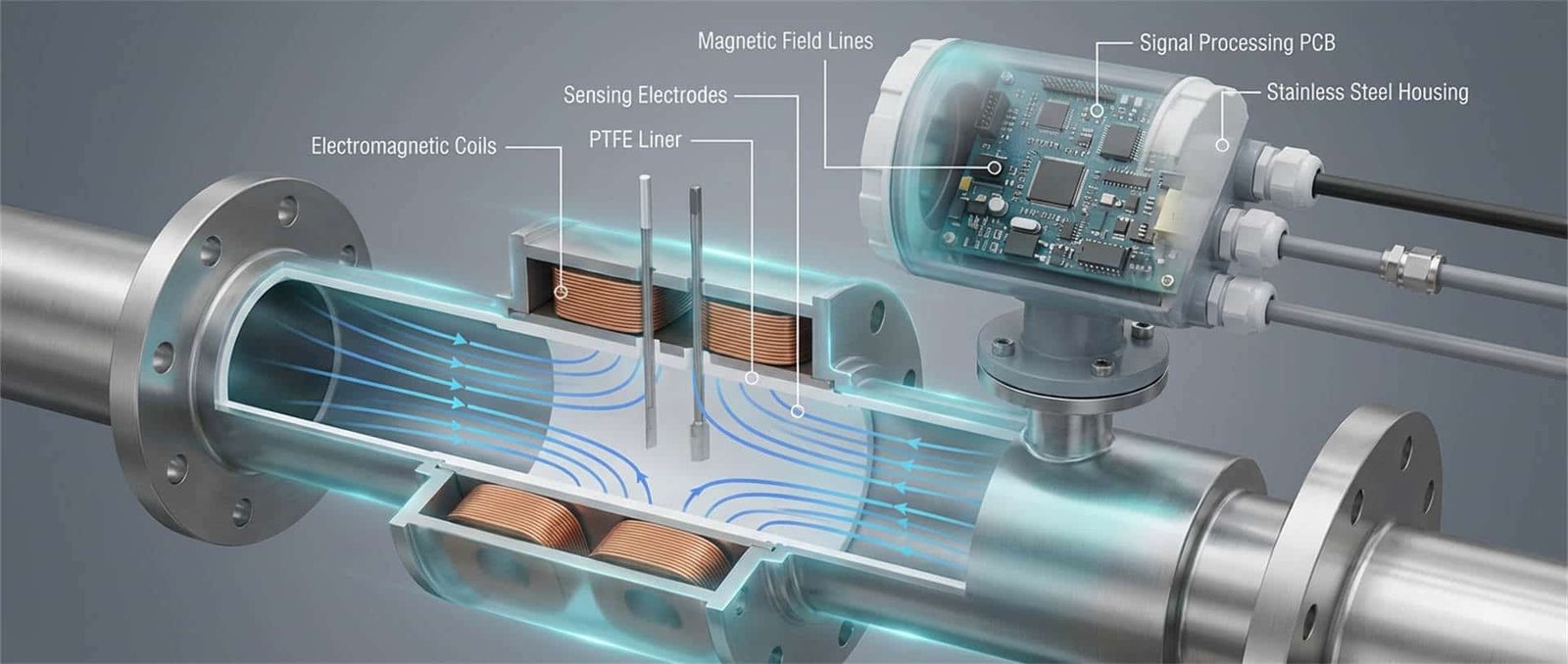
ج: تُظهر أجهزة قياس الحقول الكهرومغناطيسية (EMF) أداءً متميزًا عند قياس السوائل الموصلة، حيث يُعطى أهمية كبيرة لعدم حدوث انخفاض في الضغط، والتشغيل الذي لا يتطلب صيانة، ومقاومة التغيرات في اللزوجة. مقارنةً بعدادات التوربين: تتميز تقنية EMF بانعدام انخفاض الضغط (تتسبب التوربينات في انخفاض يتراوح بين 0.05 و0.15 بار)، ولا تحتوي على أجزاء متحركة تتطلب صيانة (تحتاج التوربينات إلى استبدال المحامل كل 3-5 سنوات)، كما أنها غير متأثرة بتغيرات اللزوجة والكثافة (تتدهور دقة التوربينات مع زيادة اللزوجة)، وتتمتع بالقدرة على التعامل مع الملاط والسوائل الملوثة (التي قد تتسبب في تلف دوارات التوربينات). توفر عدادات التوربين دقة أفضل قليلاً (±0.25% مقابل ±0.5%) وتعمل مع السوائل غير الموصلة للكهرباء. مقارنة مع أجهزة قياس الدوامة: توفر تقنية EMF دقة أعلى (±0.5% مقابل ±1%)، ونطاق قياس أوسع (100:1 مقابل 10-20:1)، وانعدام انخفاض الضغط (بينما تسبب تقنية الدوامة انخفاضًا يتراوح بين 0.1 و0.3 بار)، كما أنها قادرة على التعامل مع الملاط (بينما تتطلب تقنية الدوامة سوائل نظيفة). تعمل تقنية الدوامة مع الغازات والبخار. مقارنةً بأجهزة القياس بالموجات فوق الصوتية: تُعد تقنية EMF أقل تكلفةً للأحجام الأصغر (DN25-DN300)، وأكثر دقةً (±0.5% مقابل ±1-2%)، ولا تتأثر بفقاعات الغاز حتى 5%. تتفوق تقنية الموجات فوق الصوتية في الأنابيب الكبيرة جدًّا (DN500+) والتطبيقات ثنائية الاتجاه. اختر تقنية EMF لمعظم تطبيقات السوائل الموصلة التي تتطلب الدقة والموثوقية وتكلفة دورة حياة منخفضة.
السؤال 3: هل يمكن لأجهزة قياس الحقول الكهرومغناطيسية قياس الملاط، وما هو تركيز المواد الصلبة المقبول؟
ج: نعم، تتميز أجهزة قياس EMF من Jade Ant بقدرتها الفائقة على قياس الملاط والسوائل التي تحتوي على مواد صلبة عالقة — وهذه إحدى أكبر مزاياها مقارنة بأجهزة قياس التدفق الميكانيكية التي قد تتعرض للانسداد أو للتآكل المتسارع. فمسار التدفق الخالي من العوائق يمنع الانسداد، في حين أن مواد البطانة المناسبة تقاوم التآكل. تقيس أجهزة قياس EMF بشكل روتيني الملاط الذي تصل تركيزات المواد الصلبة فيه إلى 25% من حيث الحجم، بما في ذلك مخلفات التعدين، ومياه الصرف الصحي التي تحتوي على مواد صلبة عالقة، ولب الورق (بكثافة تتراوح بين 3 و6%)، وطين الحفر، وملاط التجريف، ونفايات معالجة الأغذية. بالنسبة للملاط الكاشطة، يرجى تحديد بطانة من البولي يوريثان لتحقيق أقصى درجة من مقاومة التآكل، أو بطانة خزفية (ألومينا) للتآكل الشديد في تطبيقات التعدين. وتناسب البطانات المصنوعة من المطاط الطبيعي التطبيقات ذات التآكل المعتدل بتكلفة أقل. تأكد من بقاء سرعة التدفق أعلى من 0.6 م/ث (ويفضل أن تكون 1-2 م/ث) لمنع ترسب المواد الصلبة في أنبوب القياس. في حالة التركيزات العالية جدًّا من المواد الصلبة (>25%)، يجب مراعاة التأثير على الموصلية الكهربائية للسائل — فإذا كانت المواد الصلبة غير موصلة وكانت التركيزات عالية جدًّا، فقد تنخفض الموصلية الفعالة إلى ما دون عتبة القياس.
السؤال 4: ما هي أعمال الصيانة التي يتطلبها جهاز قياس الحقول الكهرومغناطيسية؟
ج: الصيانة الدورية محدودة للغاية. شهريًّا: الفحص البصري للتأكد من عدم وجود أضرار مادية أو تسربات أو تآكل. سنويًا: التحقق من دقة القياس مقارنةً بالطرق المستقلة، وفحص التوصيلات الكهربائية والتأريض، وتنزيل البيانات التشخيصية ومراجعتها. حسب الحاجة (لا يُطلب عادةً): تنظيف الأقطاب الكهربائية في حالة ظهور الترسبات الكلسية أو النمو البيولوجي (الأعراض: انخفاض شدة الإشارة، وقراءات غير منتظمة). Every 10-15 years: Consider factory refurbishment including liner inspection/replacement if used in abrasive service, converter electronics upgrade to latest technology. The key advantage is that EMF meters require NO internal mechanical maintenance—no bearings to replace, no rotors to service, no wearing parts. For clean liquid applications, many EMF meters operate 15-20 years with only annual performance verification and no internal maintenance. This maintenance-free reliability dramatically reduces lifecycle costs compared to mechanical meters requiring bearing replacement every 3-5 years.
Q5: How accurate are EMF meters, and what affects their accuracy?
ج: Jade Ant EMF meters deliver ±0.5% of reading accuracy as standard, with ±0.2% accuracy available for custody transfer and high-precision applications. This accuracy is maintained across the full flow range from minimum velocity (typically 0.03 m/s) to maximum (15 m/s), representing exceptional 100:1 or greater rangeability. Factors that do NOT affect EMF accuracy (unlike other technologies): viscosity changes, density changes, temperature variations, pressure fluctuations, or flow profile disturbances—the electromagnetic measurement principle is fundamentally independent of these parameters. Factors that CAN affect accuracy: inadequate grounding causing stray current interference, air entrainment or partially filled pipes triggering empty pipe detection, extreme electrical noise from nearby VFDs or welding equipment, electrode coating from scaling or biological growth (rare with proper flow velocity), and conductivity below the meter’s minimum threshold. Proper installation with adequate grounding, keeping the tube full, and maintaining minimum flow velocity ensure long-term accuracy stability.
Q6: Can EMF meters be installed vertically, and does orientation matter?
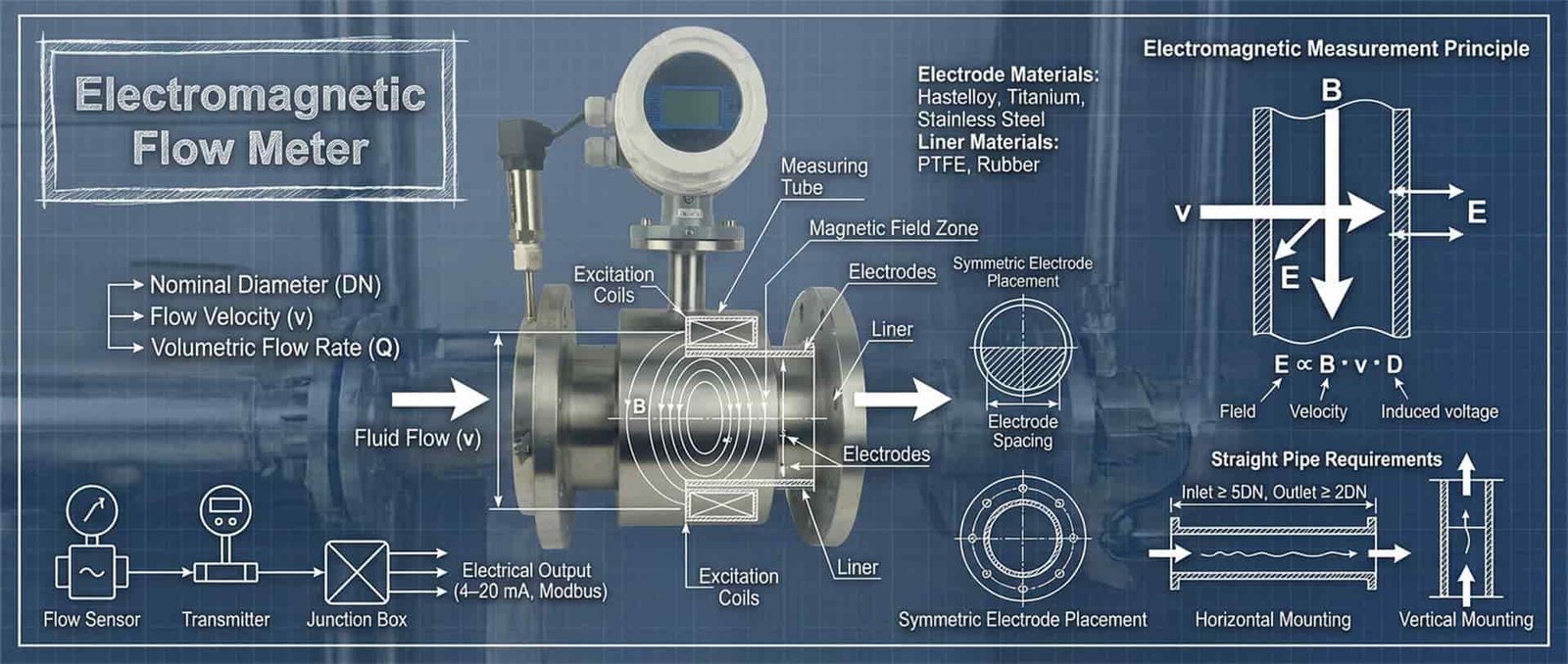
ج: Yes, Jade Ant EMF meters can be installed horizontally, vertically, or at any angle. However, specific orientation guidelines optimize performance. Horizontal installation: Position electrodes horizontally (3 and 9 o’clock) to prevent air bubbles from accumulating on electrode surfaces—bubbles rising to the top of the pipe will pass through the magnetic field without contacting electrodes. Vertical installation: Always install with upward flow (bottom to top) to ensure the tube remains full and prevent sediment accumulation. Downward vertical flow risks the tube not remaining full at low flows. Electrode orientation: The electrode axis must be horizontal regardless of pipe orientation. For slurry applications or liquids with sediment, vertical installation with upward flow is preferred to prevent solids settling. For applications with entrained air, horizontal installation with electrodes horizontal prevents bubble interference. The meter measures equally accurately in any orientation if these guidelines are followed.
Q7: What grounding requirements are critical for accurate measurement?
ج: Proper electrical grounding is absolutely essential for EMF meters—inadequate grounding is the most common cause of measurement problems. The meter must establish a common electrical potential with the liquid to accurately detect the millivolt-level induced voltage. For metallic piping: Connect the meter body to electrical ground with verified resistance <10Ω using a properly sized ground wire (typically 10 AWG / 6mm² minimum). The metallic pipe provides electrical continuity to the liquid. For non-metallic piping (PVC, fiberglass, plastic-lined steel): Install grounding rings on both flanges of the meter and connect both rings to electrical ground—this establishes electrical contact with the liquid through the grounding ring electrodes. Some meters have built-in grounding electrodes that serve the same purpose. For applications with stray currents: Install insulating gaskets and sleeves to electrically isolate the meter from the piping, then ground only the meter—this prevents stray pipeline currents from flowing through the meter and causing measurement errors. Verify ground resistance annually as corrosion can increase resistance over time.
Q8: Can EMF meters measure low-conductivity liquids like deionized water or alcohols?
ج: Standard EMF meters require minimum conductivity around 5 μS/cm, which may be marginal for deionized or ultra-pure water (0.1-1 μS/cm) and insufficient for pure alcohols or organic solvents (<0.1 μS/cm). However, Jade Ant offers specialized low-conductivity EMF meters using advanced multi-frequency excitation and high-sensitivity amplification capable of measuring liquids with conductivity as low as 0.05 μS/cm. These meters successfully measure demineralized water, WFI (Water for Injection), certain alcohols, and low-conductivity chemicals. The technology uses higher excitation frequencies, platinum or gold-plated electrodes for lower electrochemical noise, and advanced signal processing to extract weak signals from low-conductivity liquids. Applications include ultra-pure water in pharmaceutical and semiconductor manufacturing, boiler feedwater in power plants, and certain chemical processes. Specify low-conductivity configuration when ordering if your application involves conductivity below 20 μS/cm—this ensures optimal sensor and converter configuration for reliable measurement.
Q9: What communication protocols are available, and can I integrate with my existing SCADA system?
ج: Jade Ant EMF meters offer comprehensive communication options for seamless SCADA and control system integration. Modbus RTU (RS485) is the most common digital protocol—simple to implement, widely supported by PLCs and SCADA systems, supports up to 32 devices on a single bus, baud rates 1200-115,200 bps configurable. بروتوكول HART superimposes digital communication on the 4-20mA analog signal, allowing simultaneous analog transmission and digital configuration/diagnostics without additional wiring—ideal for asset management and remote configuration. بروفيبوس DP provides high-speed fieldbus communication (9.6 kbps to 12 Mbps) for Siemens and other advanced automation platforms. Foundation Fieldbus H1 offers all-digital communication at 31.25 kbps with advanced function blocks for distributed control. EtherNet/IP and Modbus TCP provide direct Ethernet connectivity for modern network-based control systems. Most converters support multiple simultaneous outputs—for example, 4-20mA + Modbus + pulse output—allowing independent connections to recorders, controllers, and monitoring systems. Specify required protocols when ordering as some require different converter hardware.
Q10: How do I select the right meter size for my application?
ج: For EMF meters, matching your pipe size is the best practice—this maintains flow velocity in the optimal range (1-5 m/s for most applications) and minimizes installation cost. The exceptional 100:1 rangeability (0.03-15 m/s velocity range) means a single meter size handles flows from very low to very high without requiring oversizing or downsizing. If your normal flow produces velocity <0.5 m/s in a pipe-sized meter, consider downsizing one pipe size to increase velocity—this improves accuracy, prevents sediment settling in slurry applications, and enhances signal strength.