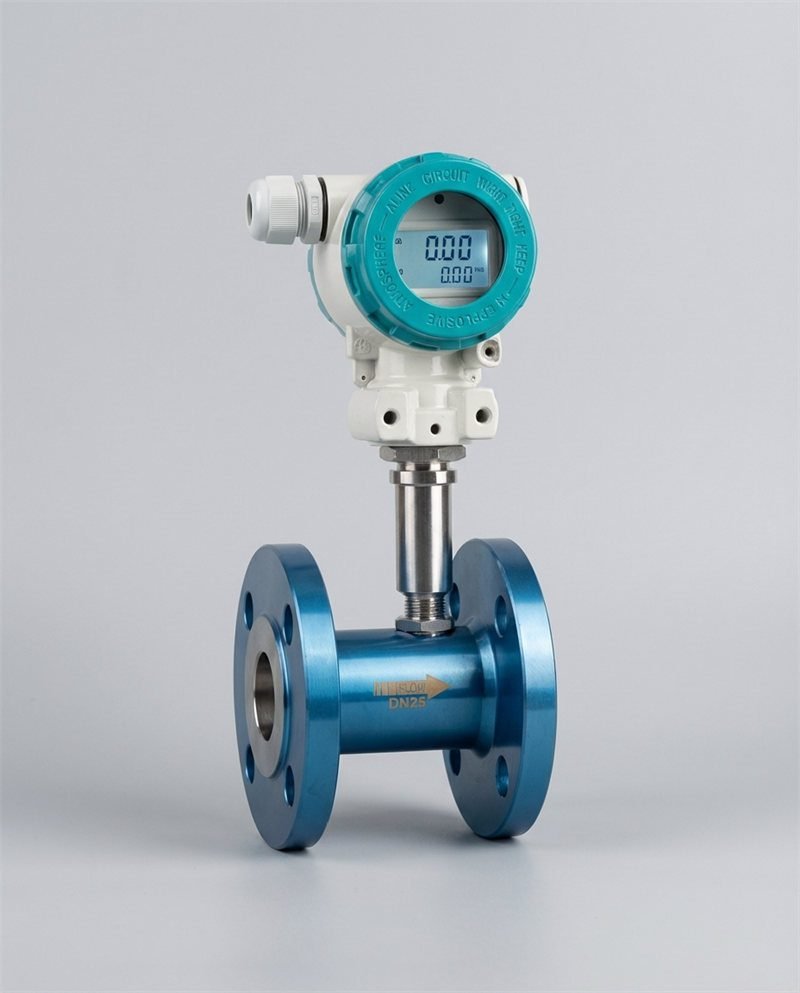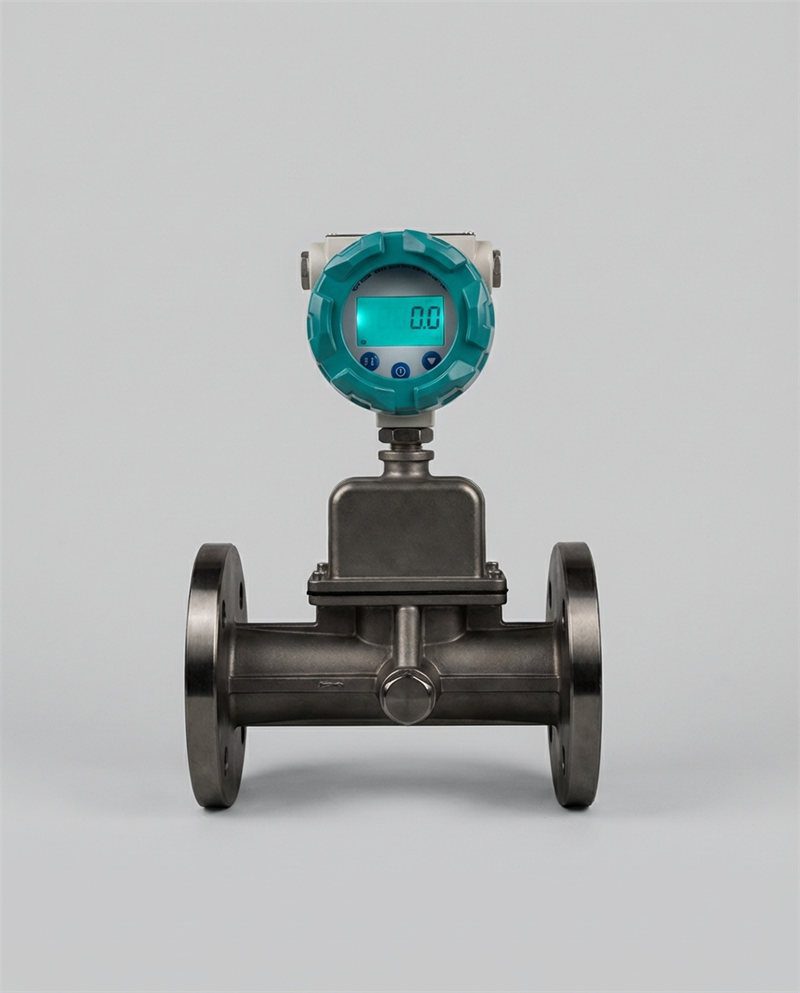
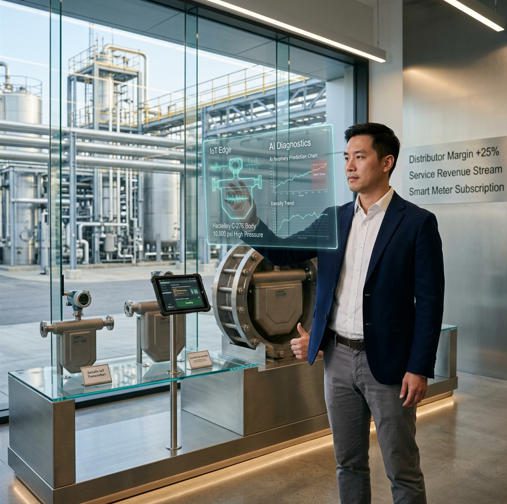
Discover how IoT integration, AI-driven diagnostics, exotic materials, and ultra-high-pressure designs are reshaping Coriolis measurement — and how your distribution business can capitalize on each innovation to expand market opportunities and protect margins.
 Modern Coriolis mass flow meters are at the heart of smart industrial measurement — from chemical plants to pharmaceutical facilities. | Photo: Unsplash
Why These Trends Matter to Distributors Right Now
The global flow meter market reached USD 11.44 billion in 2025 and is forecast to climb to USD 18.72 billion by 2035, growing at a 6.09% CAGR (SNS Insider, 2025). Within that broader market, the intelligent flow meter segment alone — where Coriolis technology commands a 26.77% revenue share — is projected to expand from USD 5.10 billion in 2025 to USD 8.45 billion by 2034 (Straits Research).
For distributors and agents, these numbers represent a concrete commercial signal: the customers sitting across the table from your sales team are being pressured to digitize operations, reduce product loss, meet stricter emissions reporting, and demonstrate traceability to regulators. A distributor armed with data on IoT-connected mass flow measurement, AI diagnostics, and total cost of ownership wins the specification at the engineering stage — not after three rounds of price negotiation.
Meanwhile, the Coriolis meter itself is no longer one product. It is a family of instruments spanning sub-millimetre micro-bore tubes for pharmaceutical pilot plants, 900-bar exotic alloy designs for offshore chemical injection, wireless battery-powered transmitters for brownfield retrofits, and AI-enabled smart meters that predict their own maintenance requirements. Each of those variants opens a different customer conversation — and a different revenue stream.
This guide maps every major innovation reshaping Coriolis technology in 2025–2026 and translates each trend into a concrete opportunity for your territory.
📊 Distributor Insight: Specialists focused on intelligent flow measurement typically command 15–25% higher margins than generalist competitors, because they compete on technical expertise rather than unit price. The data in this guide gives your team the language to justify that premium.
1. Understanding Coriolis Fundamentals — The Baseline Your Team Needs
 Precision pipeline instrumentation: Coriolis meters require zero straight-pipe run upstream, simplifying installation compared with turbine and vortex alternatives. | Photo: Unsplash
How Coriolis Meters Work
A Coriolis mass flow meter passes fluid through one or two vibrating tubes — typically oscillating at 80–1,000 Hz. When fluid flows through those moving tubes, the Coriolis effect (the same inertial force that curves storm systems on a rotating Earth) causes the tubes to twist slightly. Two sensors — one near the inlet, one near the outlet — measure the tiny time lag between those oscillations, called phase shift (Δt). Because Δt is directly proportional to mass flow rate, the meter delivers a true mass reading with no assumption about fluid density or viscosity. The formula is: ṁ = K × Δt, where K is a meter-specific calibration constant.
A secondary output — the tubes’ resonant frequency — simultaneously provides fluid density measurement accurate to ±0.0002 g/cm³ on premium models. Combined with an integrated RTD temperature sensor, one instrument delivers mass flow, volumetric flow, density, and temperature from a single process connection.
Why Accuracy Translates Directly into Customer Revenue
When a specialty chemical plant runs a 10,000-litre batch with a volumetric meter carrying ±1.5% uncertainty, that uncertainty is ±150 litres of a raw material that may cost $20–$35 per litre. Every batch. Every day. At 250 operating days per year, one line can silently lose $750,000–$1.3 million in unaccounted material annually. A Coriolis meter at ±0.1% narrows that loss to $50,000 — a difference that funds the meter’s purchase price in under three weeks.
Current Objections — and Why Each Is Now Resolved
Traditional Coriolis meters faced three persistent sales objections: higher upfront cost versus turbine or magnetic alternatives; sensitivity to entrained gas in liquid streams; and limited wireless or digital integration in older transmitter generations. Every one of those limitations is systematically addressed by the innovations in the sections below — and every resolved limitation is a new conversation to open with a hesitant customer.
📖 Key Terms Defined
- Coriolis Effect: The inertial deflection of a moving mass within a rotating frame — in a meter, the tube twist caused by flowing fluid inside a vibrating tube.
- Phase Shift (Δt): The time difference between inlet and outlet sensor signals; directly proportional to mass flow rate.
- Drive Gain: The power the transmitter supplies to keep tubes vibrating at resonance. Rising drive gain is an early warning of tube fouling or gas entrainment.
- Custody Transfer: A fiscally binding measurement at the point where ownership of a fluid changes hands between buyer and seller.
2. IoT Integration — Connecting Coriolis Meters to the Digital Ecosystem
 IoT-enabled Coriolis meters stream real-time mass flow, density, and temperature data to cloud dashboards — giving plant managers remote visibility across multiple sites simultaneously. | Photo: Unsplash
IoT (Internet of Things) connectivity turns a Coriolis meter from a local readout instrument into a live data node inside a plant-wide — or enterprise-wide — measurement network. Instead of a technician walking the line once per shift to log a reading, every mass flow data point is timestamped, transmitted, and stored automatically at update rates up to 200 Hz.
Real-Time Data Streaming and Cloud Connectivity
Modern Coriolis transmitters support HART 7, Foundation Fieldbus, Profibus PA, Modbus RTU/TCP, and EtherNet/IP. Leading manufacturers are now adding native MQTT and OPC UA outputs, allowing meters to publish directly to cloud historians like OSIsoft PI or AWS IoT Core with no middleware PLC required. A North American petrochemical operator reported reducing historian configuration time from 14 days per site to under 4 hours after switching to MQTT-native transmitters in 2024.
The intelligent flow meter market — specifically devices with these digital communication and analytics capabilities — is projected to grow from USD 5.10 billion in 2025 to USD 8.45 billion by 2034, with Coriolis meters holding the largest individual technology share at 26.77% of segment revenue (Straits Research, 2025).
A New Revenue Model for Distributors
The commercial model changes when your meter becomes a data node. Several leading manufacturers now offer annual SaaS-style diagnostic services — meter health scores, calibration drift alerts, and process KPI dashboards — bundled with hardware sales. For a distributor, this creates recurring annual revenue of $400–$1,200 per installed meter, plus service calls triggered by dashboard alerts rather than only by equipment failures. At a customer base of 200 installed meters, that is $80,000–$240,000 in predictable annual service revenue added to your P&L without acquiring a single new customer.
Integrating with SCADA and Existing DCS Infrastructure
SCADA (Supervisory Control and Data Acquisition) is the software layer plant operators use to monitor and control processes. Coriolis meters with dual-protocol transmitters — simultaneously outputting 4–20 mA analog and digital HART — slot into existing DCS architectures without forcing a controls upgrade. This is a critical buying criterion for plants with $10–$50 million invested in legacy infrastructure. Distributors who can demonstrate plug-and-play integration with a customer’s existing Honeywell Experion, Emerson DeltaV, or Siemens PCS 7 system remove the single biggest adoption barrier: change risk.
Cybersecurity: The Question Your B2B Customers Will Ask
Connecting flow meters to enterprise networks introduces OT (Operational Technology) cybersecurity obligations. The CISA ICS Security Framework recommends network segmentation between IT and OT layers, role-based access control for meter configuration changes, and encrypted firmware update pathways. Distributors serving critical infrastructure — water utilities, refineries, pharmaceutical manufacturers — should be prepared to answer security questionnaires and recommend meters with IEC 62443-4-2 component-level certification. Building this literacy into your technical sales team differentiates you from vendors who simply hand over a spec sheet.
| Year | Intelligent Flow Meter Market Size | YoY Growth |
|---|---|---|
| 2025 | USD 5.10 billion | Baseline |
| 2026 | USD 5.35 billion | +4.9% |
| 2028 | USD 6.40 billion (est.) | +9.4% |
| 2030 | USD 7.50 billion (est.) | +8.6% |
| 2034 | USD 8.45 billion | +6.0% CAGR |
Sources: Straits Research; Fortune Business Insights, 2025.
3. AI-Driven Diagnostics — Predictive Intelligence That Sells Service Contracts
Coriolis transmitters generate a continuous stream of secondary variables beyond mass flow: drive gain, tube damping coefficient, zero stability, and sensor temperature. For most of the technology’s 40-year commercial history, those variables sat in a register that only a service engineer read during an annual check. Machine learning now watches those variables 24/7, flagging deviations before they become failures.
What Predictive Maintenance Actually Looks Like in the Field
A petrochemical refinery in the US Gulf Coast documented a concrete case in 2024: drive gain on a 3-inch Coriolis meter measuring crude condensate began climbing gradually over six weeks — from a baseline of 22% to 41%. The AI platform flagged the anomaly at week three and predicted tube fouling within 45 days with 87% confidence. The maintenance team scheduled a clean-in-place cycle during a planned weekend shutdown. The avoided unplanned downtime was valued at $340,000 per event. Predictive maintenance of this kind typically reduces Coriolis-related unplanned downtime by 30–45% in process industries, according to Endress+Hauser predictive maintenance research.
Anomaly Detection Beyond Simple Threshold Alarms
Beyond fouling, AI systems detect process anomalies that the meter itself cannot classify: a sudden Brix deviation in a beverage filler; a viscosity spike indicating an off-spec raw material feed; or a zero-point drift that indicates pipe stress at the meter’s process connections. These alerts arrive in the plant historian, in the SCADA alarm list, and — with modern IIoT platforms — as a push notification on the process engineer’s phone.
Emerson’s Smart Meter Verification technology performs an automated diagnostic routine in under 95 seconds, generating a pass/fail report referenced against the meter’s original factory certification — with no process interruption and no hot work permit required. The on-demand webinar “The Power of Enhanced Coriolis Diagnostics” walks through exactly how this works in a live process environment.
{{< youtube I27HRFrdQPY >}} Source: Emerson Measurement Instrumentation — Achieving Measurement Confidence: The Power of Enhanced Coriolis Diagnostics
Optimizing Calibration Intervals with Condition Monitoring
ML algorithms also optimize calibration schedules. Traditional practice calls for annual calibration regardless of meter condition — at a cost of $1,200–$3,500 per meter per visit including process downtime and a certified calibration rig. AI-based condition monitoring can extend calibration intervals for meters in stable, clean-service applications from 12 months to 36 months with documented statistical confidence, cutting that cost line by two-thirds. For a distributor managing 150 meters under service contracts, that operational leverage directly improves service margin.
Diagnostic Depth as Your Sales Differentiator
When your sales team presents a comparative bid to a plant engineering manager, the question is no longer “which meter is most accurate?” — all premium Coriolis meters now clear ±0.1%. The question becomes: “Which supplier will tell me something is wrong before it shuts down my plant?” Distributors representing manufacturers with genuine AI diagnostic platforms — rather than simple threshold alarms relabeled as “smart” features — win specification conversations. Companies like Jade Ant Instruments actively track these capability differences across manufacturers, equipping distribution partners with technically accurate, side-by-side comparisons.
4. Exotic Materials — Opening High-Value Applications Competitors Cannot Touch
 Hastelloy C-22 and titanium tube materials extend Coriolis measurement to hydrofluoric acid, chlorine compounds, and highly oxidizing process fluids that destroy standard 316L stainless steel within months. | Photo: Unsplash
Standard Coriolis meters use 316L stainless steel tubes — suitable for water, mild chemicals, petroleum products, and most food-grade applications. A growing share of high-margin applications involve fluids that attack 316L within months: concentrated hydrofluoric acid, sodium hypochlorite above 15%, highly oxidizing pharmaceutical synthesis intermediates, and seawater injection services. Materials science innovation is opening those markets to Coriolis technology — and to the distributors who understand the options.
Titanium, Hastelloy C-22, and Tantalum
Hastelloy C-22 (a nickel-chromium-molybdenum-tungsten alloy) offers corrosion resistance 4–8× superior to 316L in oxidizing acid environments. Titanium Grade 2 excels against chlorine derivatives, seawater, and wet bromine. Tantalum is practically inert to all mineral acids at temperatures up to 150°C — making it the material of choice for ultra-pure semiconductor chemical dosing. Each material narrowing the set of applications that require a completely different measurement technology, and opening customer conversations your competitors may not be equipped to have.
Emerson’s Micro Motion product family includes configurations rated to 13,000 psi (900 bar) in exotic alloys for offshore chemical injection and supercritical CO₂ measurement — applications that simply did not exist in the Coriolis product range a decade ago (Control Engineering).
PTFE and PFA Coating for Hygienic and Corrosive Applications
Where full tube replacement with exotic alloy is cost-prohibitive, advanced coatings extend the service life of standard stainless bodies. PTFE (polytetrafluoroethylene) and PFA (perfluoroalkoxy alkane) linings, already established in magnetic flow meters, are now applied to Coriolis tube interiors for applications involving mildly corrosive slurries and sticky polymeric fluids. EHEDG-certified PFA-coated Coriolis tubes appear in the EHEDG certified equipment register for dairy and food applications requiring full CIP/SIP compatibility.
Industry-Specific Material Selection Matrix
| Industry | Recommended Tube Material | Key Requirement | Typical Fluid |
|---|---|---|---|
| Pharmaceutical | 316L electropolished or Hastelloy C-22 | USP Class VI / FDA 21 CFR; CIP/SIP | APIs, solvents, WFI |
| Food & Beverage | 316L (3-A / EHEDG certified) | Ra ≤ 0.8 µm; self-draining | Milk, syrup, carbonated beverages |
| Specialty Chemicals | Hastelloy C-22 or Titanium | Halogen and oxidizing acid resistance | HCl, HF, NaOCl, H₂SO₄ |
| Petrochemical / LNG | 316L low-temp rated (to –200°C) | Cryogenic stability; API MPMS 5.6 | LNG, propane, ethylene |
| Semiconductor / Battery | Tantalum or PFA-lined | Zero metallic ion contamination | H₂O₂, NMP, electrolyte slurries |
5. Ultra-High-Pressure Designs — Where Coriolis Replaces Multi-Instrument Arrays
Until recently, applications above 300 bar (4,350 psi) defaulted to positive-displacement meters or orifice plates, because Coriolis tube geometries could not safely contain the pressure. That ceiling has been broken. Emerson’s Micro Motion high-pressure Coriolis line is rated to 900 bar (13,000 psi) and certified to both ASME B31.3 Chapter IX (high-pressure piping) and the European Pressure Equipment Directive (PED) 2014/68/EU — opening offshore chemical injection, supercritical extraction, and high-pressure hydrocarbon measurement to direct mass flow technology (Emerson Micro Motion High Pressure Data Sheet).
Structural Engineering Behind the Pressure Rating
Achieving 900 bar in a vibrating tube requires fundamentally rethinking tube geometry. Engineers have moved from single-loop U-tubes toward straight-through dual-tube designs with reinforced collars, or compact helical geometries that distribute hoop stress more evenly. Each variant is hydrostatically tested to 150% of rated working pressure — 1,350 bar for a 900-bar meter — before leaving the factory.
Weight and Footprint Reduction for Offshore Applications
Offshore platforms impose strict weight and footprint budgets. A high-pressure Coriolis meter that replaces a turbine meter plus a density meter plus a temperature transmitter — three instruments, their associated impulse lines, and isolation valves — reduces topside weight by 40–60 kg per measurement point. For a production platform with 20 such points, that is 800–1,200 kg of deck-load reduction, translating directly into structural cost savings or additional process capacity.
10-Year Total Cost of Ownership: High-Pressure Measurement (DN25, 600 bar Service)
| Cost Element | Turbine + Density + TT | HP Coriolis (Single Unit) |
|---|---|---|
| Hardware purchase | $9,800 | $18,500 |
| Installation / commissioning | $6,200 | $2,800 |
| Annual calibration (10 yr) | $24,000 | $8,500 |
| Bearing / seal replacements (10 yr) | $7,400 | $0 |
| Unplanned downtime losses (est.) | $31,000 | $6,500 |
| Measurement-error product loss | $18,200 | $2,100 |
| Total 10-Year TCO | $96,600 | $38,400 |
Estimates based on publicly available cost benchmarks from Anasia Process Automation and distributor field data. Individual cases will vary.
The 60% TCO advantage — even accounting for the higher hardware price — is the number that converts a hesitant plant manager into a signed purchase order. Presenting this table in a customer meeting is more persuasive than any product brochure.
6. Miniaturization — Compact Coriolis Sensors for Constrained Environments
 Micro-bore Coriolis sensors — some weighing under 1.5 kg — enable precision mass flow measurement in pharmaceutical dosing, portable calibration rigs, and skid-mounted modular systems. | Photo: Unsplash
For most of its commercial history, Coriolis technology was best suited to DN15 (½-inch) and larger process lines. Sub-DN10 measurement belonged to thermal mass flow controllers or gear-type positive-displacement meters. Micro-bore tube technology — manufacturing sensor tubes with internal diameters under 4 mm using precision EDM and wire-forming techniques — has pushed the Coriolis operating range down to 0.1 g/min at full rated accuracy.
Pharmaceutical Pilot Plants and Continuous Manufacturing
Pharmaceutical pilot plants have deployed compact Coriolis units on continuous-flow synthesis reactors where flow rates change during scale-up trials, providing the same traceable mass balance data at 1-litre batch scale that the full production plant uses at 50,000-litre scale. That data continuity from lab to plant is a regulatory asset under FDA’s Process Analytical Technology (PAT) guidelines — and a specification argument that no other flow measurement technology can match at this scale.
Mobile and Portable Applications
Compact Coriolis meters are now appearing in: portable custody-transfer verification rigs for LPG tanker loading; mobile calibration trailers that validate in-situ meter performance without pulling instruments from the line; and field-deployable reactant dosing systems for soil remediation operations. Each use case represents an equipment category your customers may not currently associate with Coriolis technology — and a new conversation to start.
Modular Skid Integration
Pharmaceutical and specialty chemical manufacturers increasingly specify skid-mounted modular process units that arrive at site pre-assembled and pre-commissioned. Compact Coriolis meters — with their zero straight-run requirement and integral transmitter options — are the natural instrumentation choice for these skids. They reduce skid footprint, eliminate impulse tubing, and arrive with factory-documented calibration certificates that directly populate the skid’s IQ/OQ/PQ documentation package.
💡 Distributor Action Point: Map your customer base for modular skid builders and contract pharmaceutical manufacturers. These segments are growing at 9–12% CAGR in Asia and Europe and represent early-adoption demand for compact Coriolis technology. A single skid builder can pull through 20–40 meters per project.
7. Multi-Parameter Sensing — One Instrument, Multiple Revenue Arguments
A Coriolis meter measuring only mass flow is already a powerful instrument. A Coriolis meter simultaneously reporting mass flow, volumetric flow, fluid density, fluid temperature, and inferred concentration — from a single process connection, with a single calibration certificate, requiring a single instrument tag — is a fundamentally different value proposition.
Simultaneous Density and Temperature Measurement
The resonant frequency of a Coriolis tube changes predictably with fluid density, giving the transmitter a real-time density output accurate to ±0.0002 g/cm³. Combined with an integrated RTD, the transmitter calculates corrected volumetric flow, net oil/water cut in petroleum streams, and concentration in binary mixtures — all without additional instruments (Endress+Hauser Coriolis Measuring Principle). A Brix analyser for a sugar-syrup line typically costs $8,000–$14,000 plus installation. A Coriolis meter already measuring that line provides density-derived Brix within ±0.1° as a secondary output at zero additional hardware cost.
Viscosity Estimation from Drive Gain Data
Advanced transmitter signal processing now extracts a viscosity estimate from the relationship between drive gain and tube damping. While not a replacement for a dedicated viscometer in precision applications, this derived viscosity output is accurate to ±10–15% for many single-phase fluids — sufficient to detect batch-to-batch feedstock variation in polymer processing, paint manufacturing, and adhesive production. Several manufacturers label this capability “density-derived viscosity monitoring,” and it is generating strong interest in specialty chemical sectors as an in-line quality gate.
Instrumentation Consolidation: The Financial Case
A single Coriolis meter replaces — in one process connection — a mass flow transmitter ($3,500–$8,000), a density analyser ($2,800–$6,500), a process temperature transmitter ($800–$1,500), and in binary-mixture applications, an inline concentration analyser ($6,000–$14,000). Beyond hardware cost, each eliminated instrument reduces process penetrations (each a potential leak point), calibration events, instrument tags, and installed wiring. In a pharmaceutical API synthesis plant with 40 such measurement points, instrument consolidation generated $840,000 in hardware and installation savings alone — before accounting for ongoing maintenance cost reduction.
The 5-factor flow meter selection framework published by Jade Ant Instruments explicitly addresses instrument consolidation as a lifecycle cost driver — particularly relevant for distributors helping customers design new production lines where multi-parameter Coriolis meters can eliminate 30–40% of total instrumentation investment.
8. Wireless and Battery-Powered Solutions — Eliminating the Wiring Cost Barrier

Running a 4–20 mA signal cable from a Coriolis meter to a marshalling cabinet 200 metres away costs $16,000–$50,000 including conduit, cable, termination, and electrician labour at industrial rates. In a greenfield plant, that cost is absorbed into project CapEx. In a brownfield retrofit — adding measurement to an existing but uninstrumented pipeline — it is often the largest single cost item, outweighing the meter itself by 3:1. Wireless transmitters eliminate that barrier entirely.
Battery Technology and Energy Harvesting
Modern lithium-thionyl chloride (Li-SOCl₂) primary cells power wireless transmitters reporting at 4-second intervals for 5–10 years in ambient conditions. Energy harvesting modules — converting pipeline vibration, thermal gradients, or solar light into DC power — extend deployment further, targeting 15-year maintenance-free operation in remote metering applications. ISA100.11a field transmitters typically use two D-cell lithium batteries with a confirmed 5-year life at 1-second reporting intervals (Emerson WirelessHART vs ISA100 White Paper).
WirelessHART vs ISA100.11a: Which to Recommend
WirelessHART (IEC 62591) uses 2.4 GHz frequency-hopping spread spectrum across 15 channels, with self-forming mesh networks that automatically re-route around interference or obstructions. ISA100.11a (IEC 62734) offers both mesh and star topologies, giving plant designers more flexibility in layout. Both standards achieve message reliability exceeding 99.9% in validated industrial deployments — equivalent to wired HART performance. The choice is typically driven by which protocol an existing DCS gateway already supports, not by performance differences. Recommend WirelessHART to customers with existing Emerson infrastructure; ISA100 to those running Yokogawa or Honeywell platforms.
Installation Cost Comparison: Wired vs Wireless (200 m cable run, single point)
| Cost Element | Wired (4–20 mA) | WirelessHART | Saving |
|---|---|---|---|
| Cable + conduit materials | $8,200 | $0 | –$8,200 |
| Electrician labour (40 hr @ $95) | $3,800 | $400 | –$3,400 |
| Commissioning / loop check | $1,100 | $250 | –$850 |
| Gateway / radio adapter | $0 | $1,800 | +$1,800 |
| Total Installation Cost | $13,100 | $2,450 | –$10,650 (81%) |
Indicative costs based on North American industrial labour and materials rates, 2025.
An 81% installation cost reduction is the number that converts a brownfield project from “too expensive to instrument” to “obvious yes.” Distributors who lead with this calculation win retrofit project business that competitors who only sell hardware never see.
9. Industry 4.0 Integration — Building the Smart Factory Data Backbone
Industry 4.0 is the integration of cyber-physical systems, IoT, and data analytics into manufacturing. Coriolis meters, with their native multi-variable output and long-standing digital communication capability, are naturally positioned as foundational data sources in smart factory architectures. The question for distributors is not whether their customers will adopt Industry 4.0 — it is how quickly, and who will supply the instrumentation when they do.
OPC UA and MQTT: The Communication Standards That Matter
OPC UA (OPC Unified Architecture) is the vendor-neutral communication standard that allows instrument data to flow directly into Manufacturing Execution Systems (MES) and ERP platforms without custom integration code. MQTT is the lightweight publish-subscribe protocol used by cloud IoT platforms. Coriolis transmitters now shipping from major manufacturers carry both — meaning mass flow data can appear simultaneously in the SCADA HMI, the cloud historian, and the ERP inventory module from a single configuration step.
Real-Time Production Optimization: A Concrete Example
A European specialty chemicals producer installed 34 IoT-connected Coriolis meters across a continuous reaction line in 2023. Within six months, the AI optimization layer feeding on real-time mass flow and density data had identified a raw-material dosing pattern correlated with a 2.3% yield improvement — worth €1.1 million annually on a €48 million product line. The discovery would not have been possible with manual log data; it required 200 Hz continuous mass flow streams from instruments that could not drift between calibrations. That use case is the future of your sales pitch.
Digital Twins: Coriolis as the Primary Data Feed
A digital twin is a live software model of a physical process, continuously updated with real sensor data. Coriolis meter output — mass flow, density, temperature, viscosity estimate — provides the mass-balance data that keeps a reactor or distillation column twin synchronized with reality. A pharmaceutical CMO using digital twins for continuous manufacturing reported a 67% reduction in out-of-specification batch events in the first year, with Coriolis meters providing the primary mass-balance input.
Industry 4.0 Capability Matrix — Modern Coriolis Transmitters (2025–26)
| Capability | Status | Distributor Opportunity |
|---|---|---|
| OPC UA native output | ✅ Available | MES / ERP direct integration |
| MQTT publish | ✅ Available | Cloud historian connectivity |
| WirelessHART / ISA100 | ✅ Available | Brownfield retrofit projects |
| AI anomaly detection | ⚡ Emerging | Service subscription revenue |
| Digital twin data feed | ⚡ Emerging | Process optimization projects |
| Cybersecurity (IEC 62443-4-2) | ⚡ Emerging | Regulated industry compliance |
| Predictive calibration scheduling | ⚡ Emerging | Maintenance contract upsell |
✅ = commercially available from major manufacturers. ⚡ = available on select models; broad rollout 2025–2027.
10. Emerging Application Segments — Green Hydrogen, CCUS, and Battery Materials
The three fastest-growing Coriolis application segments heading into 2026–2028 are not traditional process industries — they are emerging energy and advanced materials sectors where precise mass flow measurement is a technical prerequisite, not a nice-to-have.
Green Hydrogen Production and Distribution
Coriolis meters hold a 45–50% share of the hydrogen mass flow meter market in 2025, driven by their ability to directly measure the mass of a low-density, high-velocity gas stream independent of pressure and temperature fluctuations — the exact conditions that make hydrogen measurement difficult for volumetric technologies (Meticulous Research, 2025). Hydrogen mass flow meter demand is growing at 18–22% CAGR, making it the single fastest-growing Coriolis application segment globally. Distributors with existing oil-and-gas customer relationships are naturally positioned to follow those customers as they add hydrogen infrastructure.
Carbon Capture, Utilization, and Storage (CCUS)
Supercritical CO₂ — the transport form used in CCUS pipelines — presents measurement challenges that rule out most technologies: pressures above 74 bar, temperatures from 31°C to above 100°C, and phase behavior at the boundary between liquid and gas. Coriolis meters in Hastelloy C-22 or 316L with appropriate pressure ratings handle all three challenges simultaneously, and research published in ScienceDirect (2024) confirms Coriolis meters as the preferred transfer standard for CO₂ pipeline metering in accuracy comparison trials.
Battery Electrolyte and Advanced Materials
Lithium battery electrolytes — including lithium hexafluorophosphate (LiPF₆) in NMP solvent — are highly corrosive to standard stainless steel and toxic to process equipment. Tantalum-tube or PFA-lined Coriolis meters provide the only mass-based measurement option for coating-weight control and electrolyte dosing in battery manufacturing. With global battery cell capacity expanding at 30–40% annually, this segment represents a genuinely new instrumentation market — one where established flow meter distributors with Coriolis expertise have a first-mover advantage.
Estimated Coriolis Meter Demand Growth by Vertical (2025–2028 CAGR)
| Industry Vertical | Est. CAGR 2025–2028 |
|---|---|
| Green Hydrogen / CCUS | 18–22% |
| Battery Materials | 15–19% |
| Pharmaceutical / Biotech | 11–14% |
| Specialty Chemicals | 9–12% |
| Food & Beverage | 7–10% |
| Oil & Gas (Downstream) | 5–8% |
| Water & Wastewater | 4–6% |
Sources: DataIntelo Coriolis Market Report; Meticulous Research Hydrogen Flow Meter Report; GMI Insights Flow Meter Market, 2025. Estimates for distributor planning only.
11. Strategic Positioning — Building a Distribution Business Around These Trends
The Five-Step Distributor Readiness Checklist
Step 1 — Audit Your Current Account Base. Map every existing customer against the seven vertical segments in the growth table above. Customers already in pharmaceutical, hydrogen, battery materials, or specialty chemicals are your fastest path to Coriolis innovation revenue — they have the need, they have the budget pressure, and they already trust you.
Step 2 — Build Technical Credibility. Invest in manufacturer-certified application training for at least two team members per product line. A sales engineer who can correctly specify tube material, pressure rating, and communication protocol without deferring to the manufacturer’s application team closes faster and at higher margin than one who reads from a spec sheet.
Step 3 — Develop a TCO Presentation Template. The 10-year TCO comparison (hardware + calibration + maintenance + downtime + measurement-error loss) is the single most persuasive tool in a Coriolis sales conversation. Build a customizable Excel model your team can populate with a customer’s actual product value and failure cost data in a 20-minute meeting. The How to Read Flowmeter Datasheets guide from Jade Ant Instruments covers the datasheet inputs you need for accurate TCO modelling.
Step 4 — Bundle Services with Hardware. A 3-year service agreement at $900/year alongside a $6,000 Coriolis meter adds $2,700 in contracted revenue — 45% of hardware value — at higher gross margin than the hardware transaction itself. AI diagnostic platforms are the enabler: they give you a service to deliver, and they generate the data that justifies renewal.
Step 5 — Pursue Three Partnership Categories. IoT platform vendors (AWS IoT, Azure IoT Hub) whose customers need calibrated field instruments; system integrators building SCADA and DCS systems who need meter hardware relationships; and EPC contractors who specify instruments for greenfield plant projects 2–4 years before purchase orders are placed. A specification-stage relationship locks in supply before competitive bids are solicited.
Exploring the Full Product Ecosystem
Distributors who are strong in Coriolis often have natural adjacent opportunities in complementary technologies. The electromagnetic flow meter selection guide and vortex flow meter steam and gas guide from Jade Ant Instruments are useful cross-selling resources — customers who adopt Coriolis for high-value mass measurement often standardize on the same distributor for their magnetic and vortex applications in water and steam services.
The Competitive Window Is Open Now
The ten innovations covered in this guide are not speculative roadmaps for 2035. They are commercially available or actively deploying in 2025–2026. IoT-native Coriolis transmitters with OPC UA and MQTT are shipping today. Exotic alloy meters certified to ASME B31.3 are in specification at offshore projects right now. Wireless battery-powered transmitters are cutting retrofit project costs by 81% in documented field installations. Green hydrogen and battery materials are creating Coriolis demand in facilities that did not exist three years ago.
Distributors who understand these capabilities — who can model a 10-year TCO for a hesitant customer, answer an OT cybersecurity questionnaire, or specify the right tube material for a concentrated acid service — operate in a fundamentally different commercial tier than product resellers. That tier commands 15–25% higher margins and builds customer relationships that outlast any individual product generation.
Companies like Jade Ant Instruments — ISO-certified flow meter manufacturers supplying electromagnetic, vortex, turbine, and ultrasonic measurement solutions across more than 10 industries — invest continuously in technical resources for their distribution partners, recognizing that an informed distributor network is a more durable competitive asset than any single product specification.
The distributor who brings technical depth to every customer conversation is not competing on price. They are being consulted as an engineer. That is where durable business is built — and the window to establish that position in Coriolis innovation is open right now.
🚀 Ready to Position Your Team at the Forefront of Coriolis Innovation?
Explore the full technical resource library — including manufacturer comparisons, selection guides, and installation best-practice articles — to equip your sales team with the data they need to win specification conversations.
Explore Jade Ant Instruments Technical Resources →
Or browse the complete Coriolis mass flow meter guide for industrial applications to understand how leading manufacturers compare on the capabilities covered in this article.
📖 Glossary of Advanced Terms
| Term | Plain-English Definition | Real-World Example |
|---|---|---|
| Coriolis Effect | The inertial deflection force on a mass moving within a rotating frame — in a meter, the tube twist caused by flowing fluid inside a vibrating tube. | Identical physics to the force that curves hurricane spiral bands on a rotating Earth. |
| Phase Shift (Δt) | The time difference between inlet and outlet sensor signals; directly proportional to mass flow rate. | At 1 kg/s water flow in a DN50 meter, Δt ≈ 0.3–2 microseconds depending on meter design. |
| Drive Gain | The percentage of maximum power the transmitter applies to keep sensor tubes vibrating at resonance. | Baseline: 15–30%. Rising above 60%: inspect for fouling or gas entrainment. |
| Custody Transfer | A fiscally binding measurement at the point where ownership of a fluid changes hands between buyer and seller. | A 0.1% error on a 100,000 bbl/day crude oil transfer equals ~$470,000/year in billing discrepancy at $47/bbl. |
| OPC UA | Open Platform Communications Unified Architecture — a vendor-neutral protocol enabling direct data exchange between field instruments and enterprise software. | Allows a Coriolis meter to publish mass flow data directly to SAP or Oracle ERP without a custom PLC interface. |
| Digital Twin | A live software model of a physical process, continuously updated with real sensor data. | A reactor digital twin fed by Coriolis mass flow data flags yield deviation 4 hours before lab QC detects it. |
| WirelessHART | IEC 62591 — the industrial wireless standard for process instrumentation, using 2.4 GHz frequency-hopping mesh networking with >99.9% message reliability. | Allows a Coriolis meter 200 m from the control room to transmit without any signal cable. |
| PED | EU Pressure Equipment Directive 2014/68/EU — mandatory conformity assessment for pressure equipment above specified category thresholds in European markets. | Required for CE marking on a 900-bar Coriolis meter sold into Germany, France, or Italy. |
| EHEDG | European Hygienic Engineering and Design Group — certifies hygienic equipment design for food, beverage, and pharmaceutical applications. | An EHEDG-certified Coriolis meter confirms no dead zones where bacteria could accumulate during CIP cycles. |
| PAT (Process Analytical Technology) | FDA framework requiring real-time process monitoring data to assure pharmaceutical product quality during manufacturing. | A Coriolis meter providing timestamped mass flow records satisfies PAT requirements for continuous API synthesis. |
❓ Frequently Asked Questions
1. How does IoT integration in Coriolis meters improve distributor revenue beyond the initial hardware sale?
IoT-connected Coriolis meters generate continuous data streams that require interpretation, monitoring, and periodic calibration verification. This creates the foundation for annual SaaS-style service agreements — meter health scoring, calibration drift alerts, and process KPI dashboards — priced at $400–$1,200 per meter per year. At 200 installed meters, that is $80,000–$240,000 in contracted annual revenue running alongside your hardware sales. Additionally, AI diagnostic alerts generate service calls at known intervals rather than emergency calls at unknown cost — allowing your service team to schedule efficiently and maintain higher technician utilization rates.
2. Which Coriolis tube material should I recommend for a customer measuring concentrated hydrochloric acid at 30% concentration and 60°C?
At 30% HCl and 60°C, 316L stainless steel will show measurable pitting corrosion within 3–6 months. The correct specification is Hastelloy C-276 or C-22 tube material, which offers 4–8× better resistance to reducing acid environments including HCl, H₂SO₄, and mixed acid streams. Titanium is an alternative for oxidizing acid environments but performs less well in pure reducing acids. Always verify with the manufacturer’s published corrosion resistance tables and request a material compatibility certification as part of the purchase documentation — this protects both you and your customer if a corrosion failure occurs.
3. How reliable is WirelessHART in electromagnetically noisy plant environments with VFDs and arc welders nearby?
WirelessHART (IEC 62591) uses direct-sequence spread spectrum with channel hopping across 15 non-overlapping 2.4 GHz channels, combined with a self-healing mesh topology where each node maintains multiple simultaneous transmission paths. In environments with significant RF interference from variable-frequency drives, arc welders, or dense Wi-Fi deployments, the protocol automatically routes around interference on affected channels. Published reliability data from large-scale industrial deployments — including active refineries and chlor-alkali chemical plants — consistently shows message delivery rates above 99.9%. The one operating limitation is physical line-of-sight obstruction: maintain inter-node spacing below 50–75 m, and add repeater nodes to route around solid metal structures.
4. Can existing Coriolis meters installed before 2015 be retrofitted with wireless or IoT capability?
Most Coriolis meters manufactured after 2010 with HART 5 or HART 7 capable transmitters can be retrofitted with a WirelessHART adapter module — a clip-on device that intercepts the HART signal and retransmits it wirelessly, requiring no process interruption. Meters with HART 7 transmitters can additionally access secondary diagnostic variables (drive gain, zero stability) over the wireless link. For meters with analogue-only 4–20 mA outputs and no HART capability, a transmitter head replacement (typically a 30-minute field task on most meter designs) unlocks digital communication without touching the sensor or process connections. Offer customers a half-day installed base audit — it generates multiple retrofit proposals at once and costs you one technician day.
5. What is the commercial case for recommending a Coriolis meter over a turbine meter for a customer measuring low-viscosity petroleum products at medium flow rates?
The hardware price comparison favours the turbine meter — typically $800–$3,000 DN50 versus $3,000–$8,000 for Coriolis at the same size. However, the 10-year TCO comparison typically favours Coriolis by a factor of 2–2.5×. Turbine meters in hydrocarbon service require bearing replacement every 12–24 months ($600–$1,200 each), annual calibration ($1,200–$2,500 including downtime), and generate measurement error as bearings wear between services — with error introducing product loss or billing discrepancy. The comparison of leading flow meter manufacturers on the Jade Ant Instruments site provides a structured TCO framework you can adapt to a specific customer’s product value and service interval data.
6. How long does it take to implement an IoT/Industry 4.0 integration for a 10-meter Coriolis installation?
A phased approach is most practical: Phase 1 (Weeks 1–4) covers instrument selection, communication protocol confirmation, cloud historian configuration, and OT cybersecurity architecture review. Phase 2 (Weeks 4–12) covers meter installation, zero verification, and IQ/OQ documentation. Phase 3 (Weeks 8–20) covers data pipeline validation, AI baseline model training — typically requiring 60–90 days of normal operating data — dashboard configuration, and alarm threshold setting. A 10-meter brownfield retrofit at a specialty chemical plant completed this sequence in 4.5 months in a 2024 case study, with the AI platform generating its first actionable maintenance prediction in month seven. Total program value exceeded project cost within 11 months of commissioning.
7. How do I explain the value of multi-parameter measurement to a customer who only needs mass flow?
Start with the cost of the instruments they are currently running alongside their existing volumetric flow meter. If they have a separate density analyser on the same line, it costs $2,800–$6,500 to purchase and $800–$1,200 per year to calibrate and maintain. If they have an inline concentration or Brix analyser, add another $6,000–$14,000 in hardware. A Coriolis meter that replaces all three instruments with equivalent or better accuracy — and generates all three data streams from a single calibration certificate and a single instrument tag — does not require a complex ROI calculation. The hardware saving alone typically exceeds the Coriolis premium. The reduction in calibration events, instrument tags, process penetrations, and maintenance overhead makes the multi-parameter case decisive.
8. What are the most important certifications to verify when specifying a Coriolis meter for a pharmaceutical customer?
For pharmaceutical applications, verify in this order: USP Class VI or ISO 10993 (biocompatibility of wetted materials — required for any fluid contacting the final dosage form or active ingredient); 3-A Sanitary Standard 28-06 (hygienic design for dairy and food-grade applications that pharmaceutical manufacturers often adopt by reference); EHEDG certification (European equivalent confirming cleanability and no dead zones); and FDA 21 CFR Part 11 compliance for the transmitter’s electronic records and audit trail capability. Additionally, confirm that the manufacturer provides a Material Traceability Certificate (MTC) for the tube alloy — this is a standard requirement in pharmaceutical equipment qualification (IQ/OQ) documentation.
9. How should I position Coriolis meters to a customer who is already satisfied with their magnetic flow meters?
Acknowledge what magnetic meters do well: they are excellent, cost-effective, low-maintenance instruments for conductive liquids. Then identify the specific gaps a magnetic meter cannot close: it cannot measure non-conductive fluids (hydrocarbons, most organic solvents); it provides only volumetric flow (not mass — critical for batch recipes and billing based on weight); it cannot measure gas or steam; and it provides no density output. For a customer whose application fits all of those constraints — conductive liquid only, volumetric billing acceptable, no gas or steam — a magnetic meter is the right choice. For any application outside those constraints, Coriolis deserves a specification discussion. The goal is not to replace all their magnetic meters; it is to identify the three or four applications in their plant where Coriolis delivers value that magnetic technology cannot.
10. What geographic markets offer the strongest near-term growth opportunities for Coriolis distributors in 2025–2028?
Southeast Asia leads near-term growth, with Malaysia, Vietnam, and Indonesia seeing 15–20% annual growth in chemical and pharmaceutical plant CapEx as manufacturers diversify supply chains away from single-country concentration. The Middle East is investing heavily in downstream petrochemical capacity — LPG, ethylene, specialty chemicals — requiring Coriolis meters for custody transfer and product quality assurance. India’s pharmaceutical sector is expanding rapidly under PLI (Production Linked Incentive) schemes, creating demand for FDA-compliant instrumentation including Coriolis meters for batch and continuous manufacturing. For distributors with existing oil-and-gas relationships in any of these regions, the entry point is already open — the technical conversation around Coriolis simply extends from familiar territory into adjacent applications.