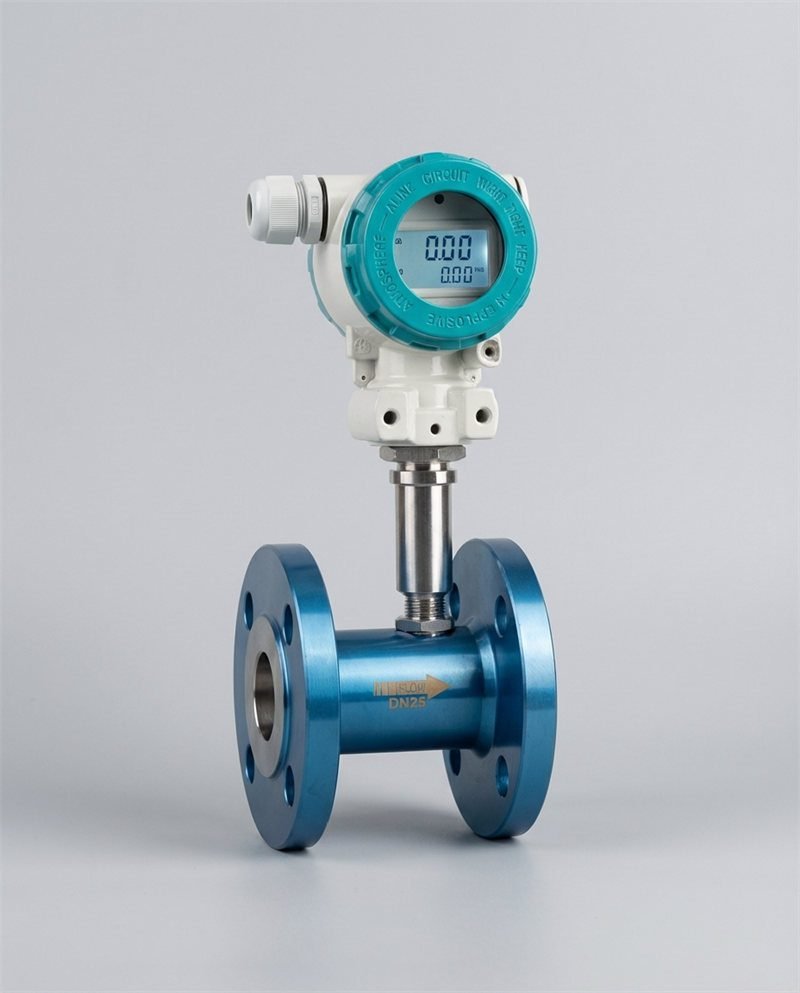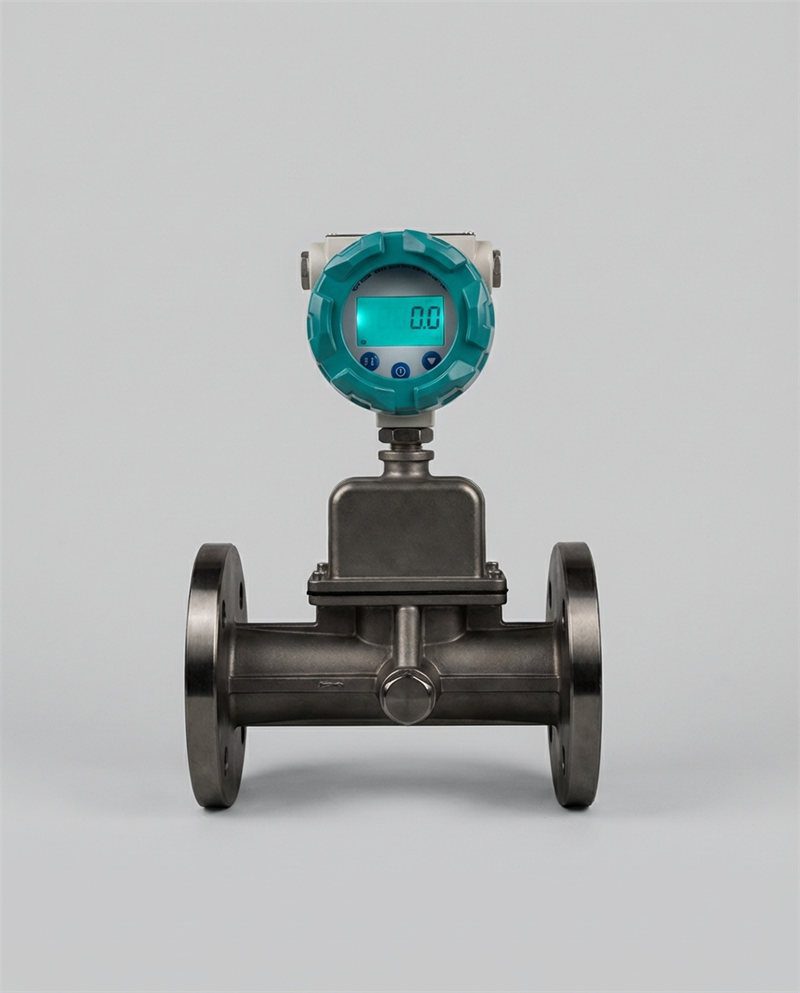
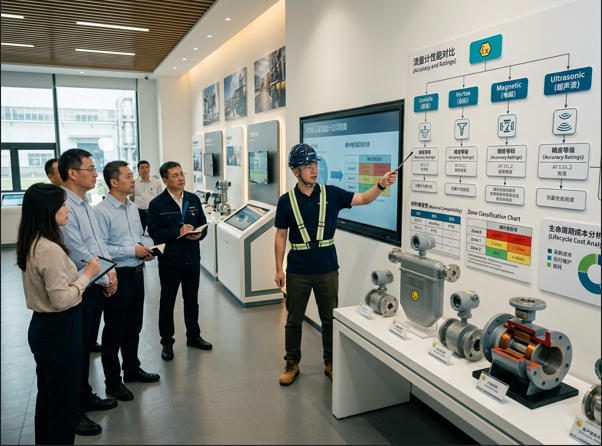
Every pipeline in a chemical plant carries more than fluid — it carries risk. When that fluid is flammable, reactive, or toxic, and the surrounding atmosphere can ignite from a single spark, the instrument measuring its flow must be more than accurate. It must be explosion-safe, zone-matched, and fully certified under the ATEX directive.
Yet walk through the instrumentation history of most chemical facilities and you’ll find a recurring pattern: engineers who chose the wrong meter not because they were uninformed, but because they followed purchase price over process fit. A magnetic flow meter rated for a benign wastewater line gets redeployed in a Zone 1 chlorine atmosphere. A turbine meter with no ATEX marking sits inside a solvent blending room. The paperwork says “compliant.” The plant audit says otherwise.
This guide gives you a structured, field-tested framework for selecting an ATEX-certified flow meter for chemical plant environments — covering everything from application definition and zone classification to material compatibility, accuracy requirements, lifecycle cost, and supplier documentation. Whether you’re specifying instruments for a new greenfield project or auditing existing installations, this article equips you with the language, decision logic, and practical checklists to do it right.
1. Define Application and Requirements
The first — and most frequently skipped — step in selecting any industrial flow meter is building a precise picture of what you are actually trying to measure, and in what context. In chemical plant environments, this step carries extra weight: a mismatch between meter capability and process reality doesn’t just produce bad data. It can create a certified instrument operating outside the conditions its certification covers.
Fluid Properties and Flow Range
Start with the fluid itself. Chemical plant flows are rarely the benign, single-phase, room-temperature water streams that show up in catalog examples. You may be dealing with a chlorinated solvent that attacks standard PTFE liners at elevated temperatures, or a concentrated acid whose density shifts by 15% across your operating range, directly affecting mass flow calculations.
The following parameters are non-negotiable to define before you open a single product datasheet:
| Parameter | Why It Matters | Example Impact |
|---|---|---|
| Fluid name / composition | Drives material compatibility, conductivity, and zone classification | Toluene → ATEX Group IIA, T1 ignition class |
| Viscosity range (min–max) | Determines if turbine or vortex meters are feasible; affects Reynolds number | Glycol at 5°C can reach 50 cP — turbine performance degrades significantly |
| Density variation | Affects volumetric ↔ mass conversion accuracy | HCl 30% has ρ ≈ 1.14 g/cm³ vs water 1.00 — 14% error if uncorrected |
| Conductivity (for mag meters) | Magnetic flowmeters require ≥ 5 µS/cm | Deionized water, hydrocarbons = NOT suitable for magmeter |
| Operating temperature (min/max) | Limits liner material selection; affects ATEX T-class requirement | PTFE liner limited to ~180°C; PFA to ~150°C continuous |
| Operating pressure | Pressure rating and flange class | Coriolis meters at >100 bar require special flange configurations |
| Flow range (Qmin / Qnormal / Qmax) | Determines turndown requirement and sizing | A process running at 5–80% of design capacity needs ≥16:1 turndown |
| Presence of solids / gas entrainment | Eliminates moving-part meters; affects lining selection | 5% entrained gas in a liquid line causes ±20% error in most DP meters |
| Table 1 — Fluid property checklist for ATEX flow meter pre-selection in chemical plants. | ||
Process Conditions and Environment
Beyond the fluid, document the process environment where the meter will live. This means ambient temperature range (including solar gain on outdoor lines), humidity, likelihood of condensation cycles, presence of corrosive airborne chemicals, and — critically — the explosion hazard zone classification of that specific location. A meter installed at the inlet to a reactor may sit in Zone 1 while a downstream custody-transfer point in an enclosed building could be Zone 2. These distinctions carry different equipment category requirements and cannot be assumed to be the same across a single plant.
2. Understand ATEX Certification Scope
ATEX is more than a badge on a nameplate. It is a legally binding EU directive (2014/34/EU for equipment, 1999/92/EC for workplaces) that governs every aspect of how electrical and mechanical equipment must be designed, tested, certified, and maintained in locations where explosive atmospheres may be present. Understanding what ATEX certification actually covers — and what it doesn’t — is essential before you compare a single product.
Ex Equipment vs. Protection Concepts
The ATEX marking on a flow meter encodes two distinct layers of information. The first is the equipment group and category (e.g., II 2G), which tells you which hazardous zones the meter can be used in. The second is the protection concept (e.g., Ex d, Ex ia), which tells you how the equipment prevents ignition.
📖 Key ATEX Protection Concepts — Quick Reference
- Ex d — Flameproof Enclosure
- The enclosure contains any internal explosion and prevents flames from escaping to the surrounding atmosphere. Common on field transmitters in Zone 1. Requires no special cabling but demands robust housing.
- Ex ia / Ex ib — Intrinsic Safety
- Limits electrical energy in the circuit below the ignition threshold of the target gas. Requires Zener barriers or galvanic isolators in the safe area. Allows use of standard instrument cable in Zone 0/1 (ia) or Zone 1/2 (ib).
- Ex e — Increased Safety
- Additional construction measures eliminate sparking and excessive temperatures under normal operation. Suitable for Zone 1/2; commonly used for junction boxes and terminal housings.
- Ex n — Non-Sparking (Zone 2 only)
- Ensures the equipment produces no arc, spark, or excessive surface temperature under normal conditions. Lower protection level; only appropriate for Zone 2.
- Ex t — Protection by Enclosure (Dust)
- Prevents dust from reaching ignition sources by controlling IP-rating. Used in Zone 21/22 (dust atmospheres).
Zone Classification and Gas/Dust Differences
The heart of ATEX site compliance is zone classification — the formal process of identifying which areas of the plant may contain explosive atmospheres, how frequently, and for how long. This classification directly determines which equipment category is legally required.
| Zone (Gas) | Zone (Dust) | Explosive Atmosphere Frequency | Required Equipment Category | Typical Chemical Plant Location Example |
|---|---|---|---|---|
| Zone 0 | Zone 20 | Continuously present or for long periods | Category 1 (EPL Ga/Da) | Inside reactor vessels, closed solvent tanks |
| Zone 1 | Zone 21 | Likely to occur in normal operation | Category 2 (EPL Gb/Db) | Pump areas, pipeline flanges, loading bays |
| Zone 2 | Zone 22 | Unlikely in normal operation; only briefly if it occurs | Category 3 (EPL Gc/Dc) | General process areas, outdoor tank farms with proper ventilation |
| Table 2 — ATEX zone classification and equipment category matrix. Source: EU Directive 1999/92/EC and IEC 60079-10. | ||||
A critical nuance that many specification engineers overlook: gas and dust hazards require separate zone classifications even in the same physical space. A powder handling area adjacent to a solvent line may carry both a Zone 2 (gas) and a Zone 21 (dust) classification simultaneously. An instrument installed there must carry certifications covering both hazard types, or two separate instrument lines must be used. Flow meters certified only for IIG (gas group) will not satisfy a combined gas+dust requirement.
3. Choose the Right Flow Meter Type
With your fluid properties defined and zone classification in hand, the next decision is the measurement technology itself. In ATEX-rated chemical plant service, not every meter type is equally practical — the protection concept, process conditions, and fluid nature all act as filters that quickly narrow the field.
Coriolis, Ultrasonic, Turbine, Magnetic — What Each Does in Practice

| Meter Type | Operating Principle | Typical Accuracy | Best-Fit Chemical Plant Applications | Key Limitations in Hazardous Service |
|---|---|---|---|---|
| Coriolis | Measures inertia force on oscillating tubes → direct mass flow | ±0.1–0.2% of reading | Precise chemical dosing, custody transfer, high-value solvents, dense slurries | High pressure drop; vibration sensitivity; Zone 1 ATEX versions add significant cost |
| Electromagnetic (Magmeter) | Faraday induction: voltage proportional to flow velocity in conductive fluid | ±0.3–0.5% of reading | Acids, bases, slurries, wastewater, any conductive chemical ≥5 µS/cm | Cannot measure hydrocarbons or non-conductive fluids; liner material critical |
| Vortex | Von Kármán vortex shedding frequency proportional to flow velocity | ±0.5–1.0% of reading | Steam, gases, clean liquids; good for high-temperature process streams | Sensitive to vibration (false signals); poor performance in low-velocity or viscous flow |
| Turbine | Rotor spin frequency proportional to volumetric flow | ±0.25–0.5% of reading | Clean hydrocarbons, solvents, lubricating liquids; custody transfer of light oils | Moving parts: sensitive to particulates, low-lubricity fluids; bearing wear over time |
| Ultrasonic (Inline) | Transit-time difference of ultrasonic pulses upstream vs downstream | ±0.5–1.5% of reading | Clean to slightly dirty liquids, non-conductive chemicals, large pipe sizes | Gas bubbles cause signal dropout; installation-dependent accuracy |
| Ultrasonic (Clamp-on) | Same transit-time principle; sensors mounted externally | ±1–3% of reading | No-shutdown retrofits, highly corrosive media, audit measurements | Lower accuracy vs inline; pipe wall condition critical; ATEX versions available but niche |
| Table 3 — Flow meter technology comparison for ATEX chemical plant service. Accuracy figures are typical; final values depend on installation, calibration, and conditions. | ||||
Biases and Installation Constraints in Hazardous Areas
ATEX service introduces a set of installation constraints that can rule out certain meter types regardless of their measurement performance. Meters with Ex d (flameproof) enclosures — the most common protection concept for inline chemical service — typically require threaded conduit entries or certified cable glands, and cable runs must be kept shorter than the entity parameters allow for intrinsically safe circuits. This means a Coriolis meter with a remote mount transmitter in a Zone 1 area requires not just an ATEX-rated sensor, but a certified transmitter, certified barrier (if IS-wired), and a complete loop verification.
Jade Ant Instruments’ flow meter selection methodology emphasizes treating the meter and its wiring system as a single certified assembly — not as independent components that can be mixed and matched post-selection. This approach, while requiring more upfront engineering effort, prevents the most common ATEX non-conformances found during third-party safety audits.
4. Material Selection and Chemical Compatibility
In standard industrial applications, material selection is important. In chemical plant ATEX service, it is decisive. The wrong liner or electrode material doesn’t just corrode — it can produce particulate contamination, unexpected chemical reactions, or structural failure that renders both the measurement and the process safety case invalid.
Wetted Materials and Coatings
The “wetted parts” of a flow meter — every surface in direct contact with the process fluid — must be chemically compatible with the fluid across the full operating temperature and concentration range. This is not just a corrosion question. Some materials that survive static immersion fail under flow conditions due to erosion, cavitation, or thermal cycling. Key wetted components to specify include the meter body/tube material, liner or lining material (for magmeters), electrode material (for magmeters), seal/gasket material, and sensing element material (for Coriolis, turbine, and vortex types).
| Material | Suitable For | Avoid With | Max. Temp. (Continuous) |
|---|---|---|---|
| PTFE Liner | HCl, H₂SO₄ (dilute), NaOH, most solvents | Fluorine gas, molten alkali metals | ~180°C |
| PFA Liner | Strong acids, oxidizers, halogens | Same exclusions as PTFE + thermal shock | ~150°C |
| Hard Rubber Liner | Dilute acids, slurries, abrasive slurries | Aromatic solvents, strong oxidizers, >80°C | ~80°C |
| Hastelloy C-276 | Chlorine, wet Cl₂, hypochlorites, seawater, strong oxidizing acids | Fuming nitric acid, oleum | ~370°C |
| 316L Stainless Steel | General chemicals, many process liquids, dilute brine | Chloride pitting (especially >60°C), HCl | ~400°C |
| Titanium | Seawater, chlorides, oxidizing acids, wet Cl₂ | Dry chlorine gas, fuming nitric acid, certain reducing acids | ~260°C |
| Platinum/Iridium Electrodes | Highly oxidizing environments, pharmaceutical, ultra-pure | Aqua regia | ~250°C |
| Table 4 — Common wetted materials for ATEX flow meters in chemical service. Always verify compatibility against the specific concentration, temperature, and mixture in your process. Reference: Emerson Magnetic Flow Meter Material Selection Guide (PDF). | |||
Chemical Compatibility and Cleanliness
Beyond corrosion resistance, two practical factors are often overlooked in chemical plant meter specifications. First, cleaning-in-place (CIP) and sterilization-in-place (SIP) cycles — increasingly common in fine chemical and specialty chemical facilities — subject meters to hot caustic solutions, strong acids, steam, and temperature shocks that may exceed normal operating conditions. A meter rated for 130°C continuous service may fail after six months of weekly CIP cycles reaching 145°C for 30-minute exposures.
Second, cleanliness requirements in pharmaceutical intermediates and high-purity chemical production demand meters with smooth, crevice-free internal surfaces, specific Ra roughness finishes (typically ≤0.8 µm Ra for pharmaceutical service), and full material traceability certificates (3.1 mill certificates per EN 10204). Specifying a standard industrial magmeter for a pharmaceutical-grade chemical process — even one with full ATEX certification — will fail a GMP audit if surface finish and traceability documentation don’t meet cGMP requirements.


5. Explosion Hazard Zone and Certification Level
Once you know your zone classification and equipment category, the ATEX marking on your flow meter becomes a critical verification document — not just a purchasing checkbox. Understanding how to read that marking in full is the difference between genuine compliance and paperwork compliance.
Reading the Ex Marking: Ex II 1/2/3, G vs D
A complete ATEX marking for a flow meter typically looks like this:
Breaking this down character by character:
- ⓔ — CE marking: conformity with EU directives
- II — Equipment Group II: surface industries (not mines)
- 2 — Equipment Category: suitable for Zone 1 (gas) or Zone 21 (dust)
- G — Gas atmosphere (D = dust atmosphere)
- Ex — Explosion protection applies
- d — Protection concept: flameproof enclosure
- b — Additional concept: control of ignition sources (non-electrical)
- IIB — Gas group: covers propane, ethylene, and less explosive gases (IIC covers hydrogen, acetylene — highest risk)
- T4 — Temperature class: max surface temperature 135°C
- Gb — Equipment Protection Level: Gb = Zone 1 gas
Temperature Class: The Autoignition Trap
Temperature class is the ATEX parameter most commonly misspecified in chemical plant applications. The temperature class must ensure the maximum surface temperature of the meter never exceeds the autoignition temperature (AIT) of the most ignition-sensitive substance present in the hazardous zone — not just the target fluid, but also any vapors, byproducts, or cleaning agents that could realistically be present.
| Temperature Class | Max Surface Temp. | Common Chemical Plant Application Examples |
|---|---|---|
| T1 | 450°C | Methane, acetone (AIT 465°C) — T1 barely sufficient for acetone; many prefer T2 |
| T2 | 300°C | Butane (AIT 365°C), ethanol (AIT 365°C) |
| T3 | 200°C | Most aliphatic hydrocarbons, lubricating oils, diesel |
| T4 | 135°C | Diethyl ether (AIT 160°C), acetaldehyde (AIT 175°C) — most chemical solvents fall here |
| T5 | 100°C | Carbon disulfide (AIT 102°C) — very narrow safety margin at T5 |
| T6 | 85°C | Carbon disulfide (AIT 102°C), special low-AIT compounds — highest protection level |
| Table 5 — ATEX temperature class vs. autoignition temperature. The meter’s T-class must result in a surface temperature below the fluid’s AIT. Source: Heating & Process T-Class Reference. | ||
- Wrong zone / equipment category mismatch — 28%
- Temperature class too high for fluid AIT — 22%
- Gas group not covering the actual substance — 18%
- Expired / unverifiable ATEX certificates — 14%
- Non-compliant cable / gland / barrier system — 11%
- Other (installation, maintenance deviations) — 7%
6. Accuracy, Turndown, and Performance
Repeatability and Calibration
In chemical plant service, the practical distinction between accuracy and repeatability deserves far more attention than it typically receives in purchase specifications. Accuracy describes how close the meter reading is to the true flow value under stated conditions. Repeatability describes how consistently the meter produces the same reading for the same actual flow, regardless of whether that reading matches the true value.
Consider a common scenario: a reactor feed controller uses a flow meter to maintain a reagent feed rate within ±2% of setpoint. The vendor’s catalog claims ±0.5% accuracy — but the meter was calibrated with water at 20°C, while the actual fluid is an organic solvent at 85°C with 40% higher viscosity. The accuracy claim no longer applies. What determines control quality is repeatability in those actual conditions. A meter with ±1.5% accuracy but outstanding repeatability in field conditions will outperform a ±0.5% catalog meter operating outside its calibration basis.
For high-stakes applications — custody transfer of expensive specialty chemicals, batch charging, or process yield calculations — request calibration certificates traceable to national standards (e.g., PTB in Germany, NEL in the UK, or NIST in the US). The IECEx certification system and ATEX Notified Bodies (such as SGS and DEKRA) also maintain calibration and testing programs that provide a credible traceability chain.
Turndown Ratio: The Practical Range Question
Turndown ratio is the ratio of maximum to minimum measurable flow at which the meter maintains its specified accuracy. It directly determines whether a single meter can cover your entire operating envelope or whether you need parallel meter runs or multiple range instruments.
In practice, a batch chemical process that runs at 8% of nominal flow during initial charging, ramps to 100% at peak reaction, then returns to 15% during product rundown needs a turndown of at least 12.5:1. A standard orifice plate (3:1 turndown) would require three separate measurement ranges with range switching — or three parallel meter legs with selection valves. A single Coriolis or electromagnetic meter handles this with one instrument and no mechanical complexity, which in an ATEX Zone 1 environment eliminates three additional certified valve assemblies and their associated maintenance burden.
7. Installation and Process Conditions

Piping, Vibration, and Thermal Expansion
Even the most carefully selected, correctly certified ATEX flow meter will deliver poor results if the installation geometry is wrong. The three most impactful installation factors in chemical plant service are straight-run compliance, vibration isolation, and thermal expansion management.
Straight-run requirements exist because most meter technologies assume a fully developed, swirl-free velocity profile at the measurement cross-section. Upstream disturbances — back-to-back elbows in different planes are the most severe — can create persistent swirl that biases the measured velocity by 2–8% even when the required nominal straight run has been provided. For high-accuracy applications (±0.5% or better), use a flow conditioner or choose a technology whose error sensitivity to profile distortion has been characterized and is within your accuracy budget.
Vibration is a particular concern in chemical plants near rotating equipment — pumps, compressors, agitators, and centrifuges. Coriolis meters, whose operating principle depends on detecting tube oscillation frequencies, are especially vulnerable to external mechanical vibration at frequencies near the tube’s natural resonance. Vortex meters can also miscount vortices if the pipe itself vibrates at frequencies resembling vortex shedding. The solution is dedicated pipe supports within 500mm of the meter body, flexible couplings to isolate pump vibration, and — for Coriolis in particular — selecting a meter with a resonant frequency well separated from the dominant plant vibration spectrum.
Thermal expansion matters in two ways. First, process temperature changes cause pipe length and diameter changes that stress the meter body and flanges — relevant for rigid technologies like Coriolis and turbine meters installed in long, unrestrained hot lines. Second, temperature changes in the meter body itself affect calibration factors in temperature-sensitive technologies. Design the piping to include expansion loops or flexible connections where large thermal excursions are expected, and ensure the flow meter is not being used as a pipe anchor.
Electrical Interfaces and Safety in ATEX Installations
The electrical installation of an ATEX-certified flow meter is not an afterthought — it is a compliance-critical engineering task. The protection concept determines the wiring method, and the wiring method determines what cable, conduit, glands, and barriers are permissible. For intrinsically safe (Ex ia/ib) installations:
- Install Zener barriers or galvanic isolators in the safe area, certified for the same gas group and T-class as the field instrument
- Use only cable with parameters within the entity parameters stated on the ATEX certificate (capacitance, inductance, resistance per unit length)
- Maintain IS circuit separation from non-IS circuits throughout the cable route
- Document all loop entity parameter calculations in the instrument loop documentation
- Never substitute barrier model or cable type without recalculating entity parameters and reconfirming ATEX compliance
For flameproof (Ex d) installations, conduit seals must be installed within 18 inches of every Ex d enclosure entry point in threaded conduit systems, preventing an internal explosion from propagating through the conduit system. Cable gland selection must match the enclosure’s Ex d designation and be certified for use with the cable type and diameter used.
8. Maintenance, Calibration, and Verification
Calibration Intervals
In hazardous area service, a flow meter’s calibration strategy is part of the overall safety case — not just a quality assurance activity. There is no universal “correct” calibration interval. The appropriate interval is determined by the criticality of the measurement (safety-critical, custody transfer, or process control), the meter technology’s historical drift behavior in that service, the fluid’s tendency to cause fouling or electrochemical drift, and regulatory or customer audit requirements.
Practical calibration intervals for chemical plant ATEX flow meters typically range from 3 months (high-precision custody transfer of expensive chemicals) to 24 months (robust magmeter in stable conductive chemical service). The drift data from your first 12–24 months of operation in each service provides the empirical basis for extending or shortening these intervals — a practice supported by ISO 9001 and IECEx maintenance standards.
In-Situ Verification Options
Removing a flow meter from an ATEX hazardous area for bench calibration involves a permit-to-work, potential process shutdown, and — if the meter is installed in a difficult location — significant mechanical cost. In-situ (in-line) verification options eliminate the need for removal and allow verification without process interruption, which significantly reduces the total verification cost and supports higher verification frequency.
Available in-situ verification approaches include clamp-on ultrasonic verification (comparing a temporary clamp-on meter against the permanent meter in service), master meter comparison (installing a calibrated reference meter in series during a test run), and — for some meter types — diagnostics-based verification using the meter’s own health monitoring functions. Some modern electromagnetic and Coriolis meters provide embedded diagnostics that can detect coil faults, liner coating, electrode fouling, and tube resonance shift — giving maintenance teams early warning of drift before it affects measurement quality.
9. Supplier Evaluation and Documentation
Technical Datasheets, ATEX/CE Certificates
In ATEX chemical plant procurement, supplier documentation is not bureaucratic formality — it is the evidence base that your safety management system, insurance provider, and plant inspector will review when an incident occurs. The minimum documentation package for any ATEX flow meter should include the following:
- EC Declaration of Conformity (DoC) — confirms compliance with ATEX Directive 2014/34/EU and any other applicable directives (PED, EMC, LVD)
- ATEX/IECEx Certificate of Conformity — issued by a Notified Body (e.g., DEKRA, SGS, TÜV, SIRA), containing the full Ex marking, applicable standards, and any special conditions of use
- Installation and Maintenance Manual — must specifically cover hazardous area installation requirements, permitted cable types, and maintenance restrictions under ATEX
- Calibration Certificate — traceable to national standards, with the calibration conditions (fluid, temperature, pressure, flow range) stated
- Material Certificates (EN 10204 3.1) — for wetted metallic parts in aggressive chemical service
- Pressure Equipment Directive (PED) Declaration — required for meters in Category I–IV service under EU PED 2014/68/EU
When evaluating suppliers, go beyond the certificate to verify that the certificate is current (ATEX certificates have no inherent expiry date, but they can be withdrawn, suspended, or superseded), that the certificate number format matches the Notified Body’s current naming convention, and that the specific model, variant, and option code you are ordering is exactly what the certificate covers. A certificate covering Ex db IIB T4 does not automatically cover a variant with an extended temperature option that pushes process temperature above the certified T4 surface temperature limit.
Service and Spare Parts
An ATEX flow meter in chemical plant service is not a set-and-forget instrument. Electrodes foul. Liners crack under thermal shock. Transmitter electronics age. The practical question to ask every potential supplier is: “Can I get the replacement parts I need, certified to the same ATEX standard, within a timeframe that doesn’t stop my plant?”
Evaluate suppliers on regional spare parts availability (warehouse stock vs. factory order lead time), local service engineer availability for ATEX-qualified installation and maintenance, firmware update support for smart transmitters, and long-term product lifecycle commitments (especially for ATEX products, where a model discontinuation forces a complete recertification exercise when replacement is needed). The Jade Ant Instruments supply model, for example, maintains stocked spare components for active ATEX product lines and provides direct technical support for installation qualification — a meaningful operational advantage when production continuity depends on measurement reliability.
10. Risk Assessment and Lifecycle Considerations

Life-Cycle Cost (LCC) and Obsolescence Planning
The purchase price of an ATEX-certified flow meter represents a fraction of its true cost over a 15–20 year service life. A structured Life-Cycle Cost (LCC) analysis forces engineers and procurement managers to quantify all cost drivers over the planned service period, enabling genuinely rational comparisons between technology options and supplier proposals.
| Cost Category | Electromagnetic Magmeter (Zone 1, DN100) | Coriolis Mass Meter (Zone 1, DN50) | Vortex Meter (Zone 1, DN80, Gas Service) |
|---|---|---|---|
| Purchase + Accessories | $4,500–$7,000 | $9,000–$18,000 | $3,500–$6,500 |
| Installation (ATEX-compliant) | $1,200–$2,500 | $2,000–$4,500 | $1,000–$2,200 |
| Annual Energy Cost (pressure drop) | ~$80/year | ~$350–$800/year | ~$120/year |
| Calibration / Verification (annual) | $600–$1,200 | $800–$1,800 | $500–$1,000 |
| Maintenance / Spare Parts (5-yr) | $500–$1,500 | $800–$2,000 | $600–$1,200 |
| Estimated 10-Year TCO | ~$15,000–$24,000 | ~$25,000–$48,000 | ~$13,000–$21,000 |
| Table 6 — Indicative 10-year Total Cost of Ownership (TCO) for ATEX-rated flow meters in chemical plant service. Figures are illustrative; actual costs depend on plant-specific energy cost, calibration frequency, maintenance access, and process conditions. Reference methodology: Flowmeters.co.uk — Why TCO Matters. | |||
Two lifecycle factors unique to ATEX products deserve specific attention. First, obsolescence: when an ATEX-certified product is discontinued, any replacement — even from the same manufacturer — requires a new ATEX certificate if the design has changed. This means you cannot simply order a “replacement” from the spare parts catalog without verifying that the replacement carries the same or superseding certificate that covers your zone and gas group. Planning for this during initial specification — choosing suppliers with proven 15+ year product lifecycle commitments and clear obsolescence management policies — prevents an expensive forced redesign during routine maintenance.
Second, ATEX documentation must be maintained throughout the asset’s life. The original certificate, installation records, any modifications (even gasket replacements with a non-identical material), and calibration history form an audit trail that demonstrates the equipment has remained within the bounds of its ATEX certification. Lapses in this documentation chain — such as replacing an electrode with a non-certified spare during a midnight emergency repair — can invalidate the instrument’s ATEX status until a formal reassessment is completed.
Availability of Replacements and Support
The availability of certified replacement components is a strategic supply chain risk, not merely a procurement convenience. Chemical plants that operate under COMAH (Control of Major Accident Hazards) regulations in the EU, or equivalent frameworks globally, must demonstrate that their safety-critical instrumentation can be maintained in a compliant state. A flow meter on a critical safety instrumented function (SIF) loop whose spare transmitter head is six months on back-order represents a documented risk that process safety auditors will flag — regardless of how good the original specification was.
Evaluate your supplier’s regional distribution capability, commitment to stocking certified spare parts for ATEX product lines, and their documented policy for notifying customers when a product is approaching end-of-support. For Coriolis and electromagnetic meters deployed in hazardous chemical service, the practical benchmark for spares availability is: critical spare (replacement flow tube or sensor body) available for delivery within 5 working days, and replacement transmitter head within 2 working days.
Conclusion: A Practical Selection Checklist
Selecting an ATEX-certified flow meter for chemical plant service is a structured engineering exercise — not a product search. Every decision point from fluid characterization through zone classification, technology selection, material compatibility, accuracy verification, and lifecycle planning builds on the previous one. Miss any step and you either end up with a non-compliant installation, a compliant installation that doesn’t perform, or a technically excellent meter that costs three times what it should over its service life.
The following checklist distills the key decision gates from this guide into a practical sequence that engineers can use as the basis for an instrument data sheet or a pre-specification review:
- Define fluid properties — composition, viscosity range, density, conductivity, temperature/pressure operating window, and presence of solids or gas entrainment.
- Obtain the zone classification drawing — confirm the specific zone, gas group, and temperature class requirement for the measurement point location before selecting any product.
- Screen meter technologies — eliminate technologies incompatible with the fluid (e.g., magmeter for non-conductive media) or zone (no certified ATEX option available for that technology in your zone).
- Verify material compatibility — for all wetted parts against the actual process fluid, including cleaning agents and abnormal conditions.
- Confirm T-class adequacy — verify that the meter’s maximum surface temperature is below the autoignition temperature of the lowest-AIT substance present in the zone.
- Size for the full operating envelope — not just nominal flow; confirm turndown adequacy from minimum to maximum expected flow.
- Evaluate installation constraints — straight-run available, vibration environment, thermal expansion, orientation, and electrical interface method.
- Request and verify supplier documentation — current ATEX/IECEx certificate from a Notified Body, covering the exact model and option code ordered.
- Calculate 10-year LCC — including installation, energy, calibration, maintenance, and parts availability risk.
- Plan calibration and verification strategy — frequency, method (in-situ vs. removal), traceability, and documentation in the safety case.
Need ATEX-Certified Flow Meters for Your Chemical Plant?
Jade Ant Instruments supplies ATEX/IECEx-certified electromagnetic, Coriolis, vortex, and turbine flow meters with full documentation packages, material certificates, and dedicated technical support for hazardous area applications. Our engineering team provides application-specific selection support — not just a product catalog.
🔗 Request a Selection Consultation → jadeantinstruments.comWhat ATEX zones typically apply to flow meter installations in a chemical plant?
The applicable zone depends on the specific location and the frequency/duration of the explosive atmosphere. In chemical plants, Zone 1 is most common for flow meters at pipe flanges, pump skids, loading/unloading connections, and enclosed process areas handling flammable solvents or gases. Zone 2 applies to general process areas with adequate ventilation where explosive atmospheres occur only in abnormal conditions. Zone 0 (continuous explosive atmosphere) is rarely the installation location for a flow meter — it typically applies to the interior of tanks and vessels, not to the pipeline itself. Equipment installed in Zone 1 must be Category 2 (EPL Gb for gas), and Zone 2 requires minimum Category 3 (EPL Gc). Always base zone determination on the site’s formal hazardous area classification drawings, not on assumptions about the fluid type alone.
How do I verify that a flow meter’s ATEX certificate is genuine and current?
Genuine ATEX certificates are issued by EU Notified Bodies listed in the NANDO (New Approach Notified and Designated Organisations) database. To verify: (1) check the certificate number — the format includes the Notified Body’s 4-digit number (e.g., 0344 for SIRA, 0905 for DEKRA), the year, and a sequential reference; (2) contact the issuing Notified Body directly and quote the certificate number to confirm it is current and not suspended or withdrawn; (3) verify that the exact model number, variant code, and any special options you are purchasing are explicitly listed in the certificate’s scope — a certificate for a standard model does not automatically cover extended-temperature or special output options. For IECEx certificates (international equivalent), all current certificates are searchable in the public IECEx CoC database at iecex.com.
Which flow meter type is best for viscous fluids in ATEX Zone 1 chemical service?
For viscous fluids (viscosity >50 cP) in ATEX Zone 1, Coriolis mass flow meters are typically the best-performing option because they measure mass flow directly via inertia effects and are largely insensitive to viscosity changes across a wide range. They maintain accuracy from very low to high viscosity without recalibration. Positive displacement (PD) meters are also excellent for moderate viscosity ranges and offer high accuracy for custody transfer, but moving parts require clean, non-abrasive fluid. Electromagnetic meters work well if the viscous fluid is also conductive (e.g., certain polymer solutions, pigment slurries). Turbine and vortex meters are generally unsuitable for high-viscosity service because increased viscosity reduces the Reynolds number below the meter’s operational range, degrading accuracy and rangeability significantly. Always verify the minimum Reynolds number requirement for the specific meter model against your actual fluid viscosity at minimum operating temperature.
Can I use a standard (non-ATEX) flow meter in a chemical plant if I install it in a safe area enclosure?
In principle, yes — if the meter’s wetted parts are entirely within the safe area and no part of the instrument (including conduit or cable runs) enters the hazardous zone. In practice, this is rarely achievable for inline flow meters, since the meter body itself must be in the process pipe, which is typically inside the hazardous area. A purged-and-pressurized enclosure (Ex p protection concept) can be used to house non-ATEX electronics in a hazardous area, but this requires a certified purging system, purge-fail alarm, and compliance with IEC 60079-2. The lifecycle cost and maintenance burden of a purged system typically exceeds the cost difference between a standard and ATEX-certified meter. For most chemical plant applications, specifying a properly ATEX-certified instrument is the more cost-effective and compliance-robust approach.
What gas group should I specify for a chemical plant handling mixed solvents?
When multiple substances are present in a zone, the ATEX gas group must cover the most hazardous substance present. Gas groups are classified by MESG (Maximum Experimental Safe Gap) and MIC ratio: Group IIA covers propane and similar substances, Group IIB covers ethylene and many common solvents (acetone, ethanol, diethyl ether), and Group IIC covers hydrogen, acetylene, and carbon disulfide — the most explosive class. For a mixed-solvent environment, identify every substance that could realistically be present (including cleaning solvents, maintenance materials, and trace byproducts) and select the gas group that covers the highest hazard. Specifying IIB when hydrogen is occasionally present as a byproduct — even in trace amounts — is a safety case failure. When in doubt between IIB and IIC, specify IIC: IIC-certified equipment is permitted in IIA and IIB zones, while the reverse is not true.
How often should ATEX flow meters in chemical plants be recalibrated?
There is no regulatory-mandated universal interval — the appropriate frequency depends on the measurement’s purpose and the meter’s demonstrated stability in service. For process control applications, annual calibration is common practice. For custody transfer or batch charging of high-value chemicals, 6-month intervals with in-situ intermediate checks are typical. For safety-instrumented function (SIF) loops, the calibration interval is determined by the functional safety assessment (IEC 61511) and must be consistent with the target Safety Integrity Level (SIL). The first 12–24 months of operation provide empirical drift data that allows the interval to be formally justified and potentially extended. Always record calibration results against the meter’s original calibration certificate to demonstrate ongoing traceability — a requirement under both ISO 9001 quality systems and most COMAH safety case standards.
What is the difference between ATEX and IECEx certification for flow meters?
ATEX (EU Directive 2014/34/EU) is the European regulatory framework — mandatory for equipment sold and used within the EU/EEA. IECEx (IEC System for Certification to Standards Relating to Equipment for Use in Explosive Atmospheres) is the international scheme administered by the IEC, accepted in over 50 countries including Australia, China (CNEX has mutual recognition), and many Gulf/Middle East jurisdictions. The technical requirements are aligned (both based on IEC 60079 standards), but ATEX requires CE marking and an EU Declaration of Conformity in addition to the technical certificate, while IECEx requires testing and certification by an ExTL (IECEx Testing Laboratory). For chemical plants operating globally or exporting to markets outside Europe, specifying a meter with both ATEX and IECEx certifications is best practice. For detailed comparison, see P+F’s ATEX vs IECEx comparison guide.
Can I replace the liner of an ATEX-certified electromagnetic flow meter in the field?
This is a critical question with significant compliance implications. The liner material is typically specified in the ATEX certificate’s scope as part of the assessed construction — because the liner’s dielectric properties, thermal behavior, and mechanical integrity affect the overall hazard assessment of the instrument. Replacing a PTFE liner with a PFA liner (even if chemically equivalent for your process) may represent a modification to the certified construction. Before any liner replacement, consult the manufacturer’s ATEX installation and maintenance instructions (which must specify permissible maintenance actions under the ATEX certificate) and, if required, obtain a Notified Body opinion on whether the modification affects the certificate’s validity. Unauthorized modifications that affect the certified construction can legally invalidate the ATEX certificate and create personal liability for the engineer who authorized the work.
What documentation should I retain after installing an ATEX flow meter in a chemical plant?
The minimum documentation package to retain — and maintain throughout the asset’s life — includes: the original ATEX/IECEx Certificate of Conformity and EC Declaration of Conformity; the complete installation record (installer’s name, date, wiring diagram, entity parameter calculation for IS circuits, photographic evidence of installation); the first commissioning calibration certificate; all subsequent calibration records; a record of any maintenance actions (including part replacements, with evidence that replacement parts were certified to the same standard); and any modifications assessments. This documentation package forms the traceability chain required by EU ATEX Directive 1999/92/EC (workplace directive, Article 7) and is typically reviewed by process safety auditors, insurers, and regulatory inspectors. Many chemical plants now maintain this documentation in a hazardous area equipment register linked to the area classification drawing.
What happens if an ATEX flow meter is operated outside its certified conditions (e.g., higher temperature than the T-class allows)?
Operating an ATEX instrument outside its certified parameters — whether temperature, pressure, voltage supply, or zone classification — constitutes a use outside the bounds of the ATEX certificate. The consequences are: (1) Legal non-compliance with ATEX Directive 2014/34/EU, which carries regulatory penalties and invalidates the plant’s hazardous area compliance case; (2) Insurance invalidation — most industrial all-risk and liability policies explicitly exclude losses arising from operation of equipment outside its certified parameters; (3) Genuine safety risk — the T-class limit is not a conservative design margin, it is the maximum surface temperature at which the equipment is proven not to ignite the certified gas atmosphere. Exceeding it means the ignition risk analysis on which the safety case is based is no longer valid. If process conditions have changed and the existing meter no longer covers them, the correct action is to re-specify and replace the instrument — not to continue operating outside certification.
📚 Key Terms Glossary
- ATEX
- ATmosphères EXplosibles — EU regulatory framework covering equipment and work environments in explosive atmospheres. Governed by Directives 2014/34/EU (equipment) and 1999/92/EC (workplaces).
- EPL (Equipment Protection Level)
- The IEC standard classification for the level of protection offered by equipment: Ma/Mb (mines), Ga/Gb/Gc (gas surface), Da/Db/Dc (dust surface). Corresponds to ATEX Equipment Category 1/2/3.
- AIT (Autoignition Temperature)
- The minimum temperature at which a substance will spontaneously ignite in air without an external spark or flame. Defines the maximum permitted surface temperature for ATEX equipment (T-class) in that substance’s presence.
- MESG (Maximum Experimental Safe Gap)
- The maximum gap through which an internal explosion cannot propagate to the surrounding atmosphere. Used to classify gas groups (IIA, IIB, IIC) for flameproof enclosures.
- Turndown Ratio
- The ratio of maximum to minimum measurable flow at which a meter maintains its stated accuracy specification. Also called rangeability.
- Ex ia / Ex ib (Intrinsic Safety)
- A protection concept that limits electrical energy in a circuit to below the ignition energy of the target gas. Ia = Zone 0/1/2; Ib = Zone 1/2.
- LCC (Life-Cycle Cost)
- Total cost of an instrument over its planned service life, including purchase, installation, energy consumption, calibration, maintenance, and decommissioning.
- Notified Body
- A third-party certification organization designated by an EU member state to perform conformity assessment for ATEX equipment. Examples: DEKRA (0344), TÜV SÜD (0123), SGS (0368).